Aerosmart UAV Trading L.L.C. is a tech company that specialises in drones and solutions in the UAE and across the GCC.
Aerosmart UAV Trading L.L.C. is a tech company that specialises in drones and solutions in the UAE and across the GCC.
To select the appropriate model of the DJI drone, it is necessary to have a clear understanding of the application, performance levels, and conditions of work. The DJI Mini, Air, and Mavic product lines are all designed with a particular job in mind, being lightweight and a visual capturing tool for professional aerial data gathering.
Being a drone company with the strongest focus on innovations, DJI plans its drones without any concession to the needs of recreational and professional customers. This post will help you be able to compare the DJI Mini, Air, and Mavic models so that you can make informed decisions.
DJI categorises its consumer and professional drones into very specific categories.
There is an alignment between each category and various operational goals and as such, comparison before investment is crucial.
Instead of settling on the most popular one, you are better off when the capabilities of the drone directly correspond to the needs in your project, i. e., inspection, surveying, or terrain analysis.
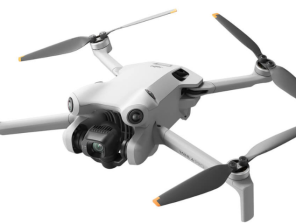
The Mini series is characterised by its small size and ease of use. These drones are more concerned with portability, although their flight performance and image quality are high for their size.
DJI Mini drones have a lightweight design, which allows them to be deployed within a controlled environment very quickly. You are able to get crisp aerial shots, do rudimentary site surveys, and brief flights without elaborate preparations. These characteristics render the Mini series appropriate for entry-level aerial documentation and fast visual evaluations.
Nonetheless, the Mini series is oriented towards the visual capture instead of data-intensive workflows. It favours simple missions in which ease, speed and movement are more important than the more sophisticated sensors and longer flight duration.
The DJI Air introduces the zone between professionalism and utility. These drones have better camera sensors, better obstacle sensors, and higher wind resistance than the Mini series.
Having improved flight stability and more sophisticated imaging, the DJI Air drones can be used to conduct detailed aerial documentation in diverse settings. It allows you to fly in moderately adverse conditions with relative ease and still have a clear image and stable operation.
The Air series is applicable to professionals who need something higher than simple images, but at the same time, consider a compact design. It facilitates organised air activity, such as medium-range surveys and monitoring of the site, with no complications of larger platforms.
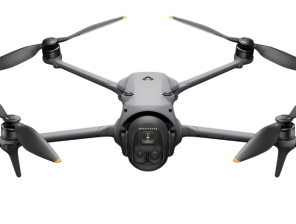
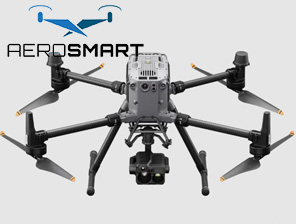
The DJI Mavic series is the most competent foldable drone of the company. These are models that provide high-end imaging systems, long flight life, and smart flight systems that are aimed at professional operations.
Mavic drones have better camera capabilities, such as high resolution and advanced stabilisation. They deal with longer missions with a sense of confidence and are precise within broad areas of operation. This renders them perfect in technical aerial work where quality and competence are paramount.
To those professionals who need large area coverage or multiple inspection processes, the Mavic series offers reliability that is proportional to the operational needs.
One of the conclusive points to make when deciding between the DJI Mini, Air, and Mavic drones is still the camera capability. Every series presents a specific level of imaging.
When you do not need a visual presentation alone, but you need to interpret the data, then the higher-end imaging is necessary.
Flight endurance has a direct effect on mission efficiency. Mini drones from DJI have shorter flight times, which are suitable when there is a need to deploy quickly and the area is limited.
DJI Air drones have increased flight time and transmission range, which enables more organised missions. On the other hand, DJI Mavic drones have the highest endurance and high transmission. This provides a stable control and capture of data in large sites, even when distant operation is required.
The intelligent flight features are incorporated in each series of DJI products to enhance the safety and ease of operation. The Mini series is aimed at simple stabilisation and assisted flights. The Air series includes further development of obstacle detection and automated flight way.
The Mavic has embedded the most sophisticated smart platforms, which enable it to allow accurate navigation, superior sensing, and intelligent return capabilities. These features ease the operational process, particularly by making it easier to handle complex air missions.
The choice of a suitable drone model depends on its intended use. DJI Mini is a lightweight option with visual recording and an easy overview. DJI Mavic is in line with professional needs. Check the DJI drone’s features to see how well they align with the intended purpose.
Aerial technology is being adopted more and more by industries to gather data-based information. Mapping drones are among the solutions that enable accurate terrain modelling, location planning, and tracking development. The Drones created by DJI Air and Mavic are fitted into such workflows, and they provide stable shots and sufficient flight stability.
In case of operations that need more in-depth data accuracy and a greater coverage, Mavic models will always perform best.
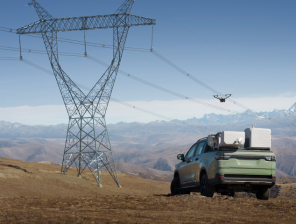
Aerial technology enhances operational expertise in industries such as mining and extensive land surveying. Here, it is safe to use DJI drones, as they simplify data capture without disrupting ground operations.
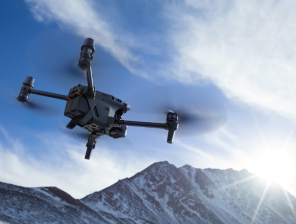
DJI Drones for Mining simplify the workflow, ensuring terrain analysis, volumetric assessment, and site documentation remain precise and stable. These conditions make Mavic drones the most capable in those settings because of their stamina and visual range.
In a like manner, mapping drones enable experts to create rich aerial data to enable planning and assessment. DJI Air and Mavic have the sensor quality and flight reliability required to process accurate mapping results.
The success of DJI as a reputable drone company guarantees that every model provides reliable technology in its line. Fairness between capabilities and needs ensures that there is no underuse and facilitates efficiency in the long run.
DJI Mini, Air and Mavic drones are each valuable when they are properly matched with an application. Take into consideration camera specifications, range, and complexity before making a decision.
For advanced industrial applications, DJI Drones for Mining and mapping play a transformative role in modern workflows. The proper choice of the platform will guarantee the correct data, safe work and the stability of performance.
When you have their differences in mind, you will be able invest in a DJI drone that can give you long-term success, reliability, and precision.
The priorities of DJI Mini are portability, Air balances the size and performance, and Mavic provides high-image, extended flight time, and smart functions that are designed to satisfy the needs of professional aerial operations.
DJI Mini is suitable for beginners because it is lightweight in design, has more simplified controls, and its flight performance is stable, making it easy to operate, thus ideal for learning aerial photography and the basic handling of a drone.
DJI Air includes superior wind stability, enhanced camera sensors, superior obstacle detection, and a longer flight period. These make it more appropriate to organise workplace activities with a higher level of professionalism than with the DJI Mini.
DJI Mavic offers advanced camera imaging, a longer range, smart flying features, and stable flight, which serve to perform complex missions in the air and require precision, consistency, and explanation in data gathering.
DJI Air and Mavic are models compatible with high-resolution imaging, precision in aerial data gathering, and stable flight paths, which allows them to be useful in mapping, surveying, and site analysis.
DJI Mini has the lowest flight time, Air has an average flight time and Mavic has the greatest flight time and range of its transmission, which allows it to cover a more significant area of operation.


✅ Thank you for reaching out. Your message has been successfully sent, and our team will get in touch with you shortly.