Aerosmart UAV Trading L.L.C. is a tech company that specialises in drones and solutions in the UAE and across the GCC.
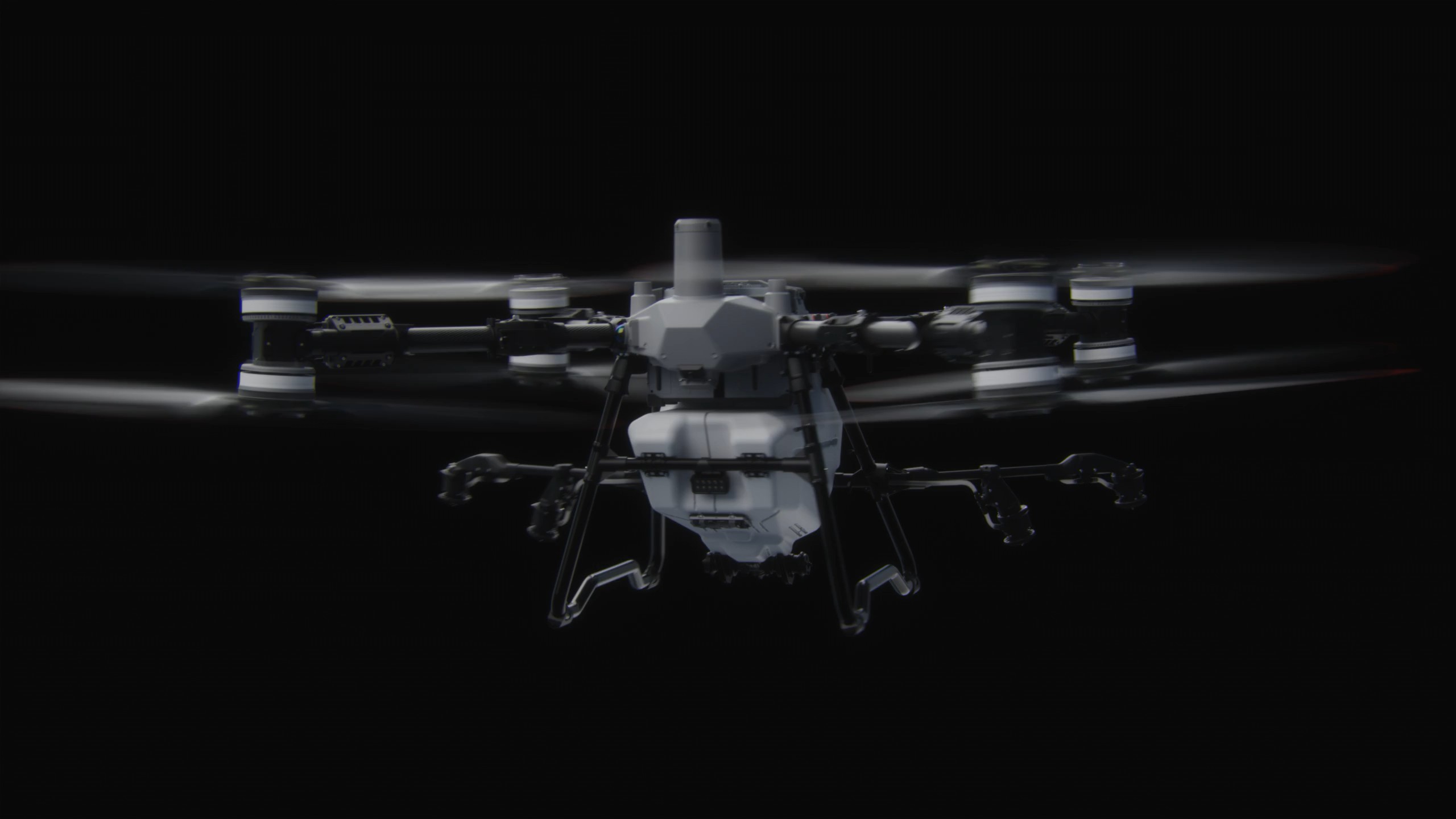
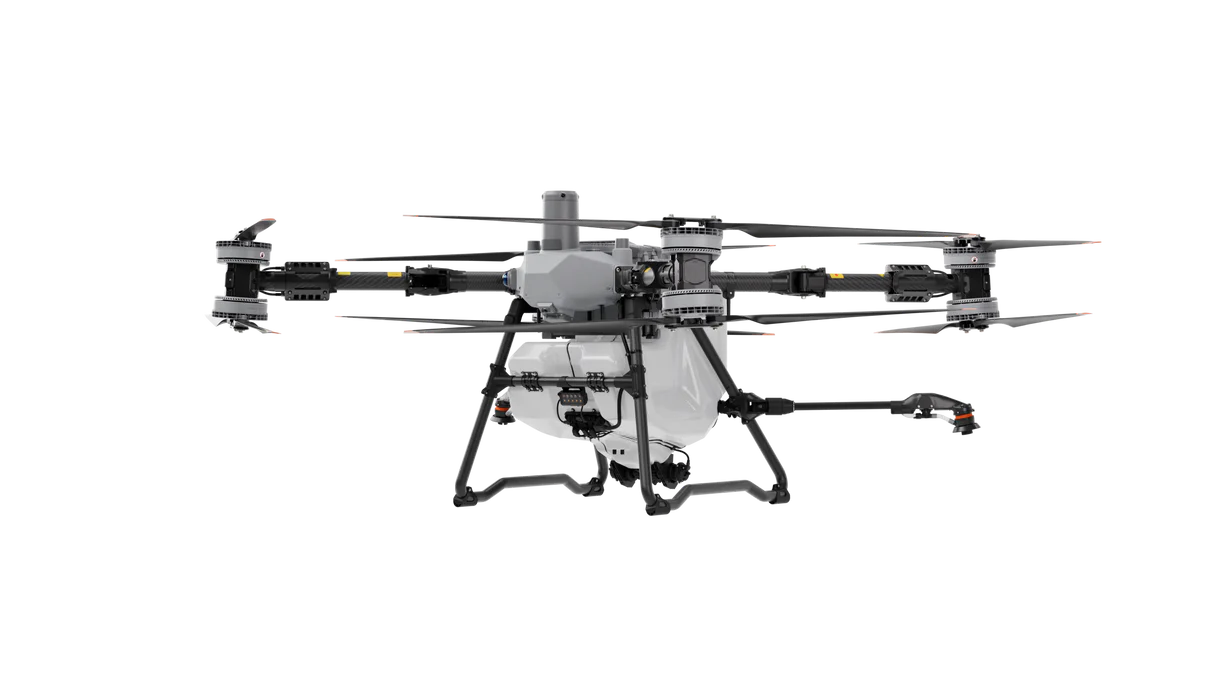
More than a decade of field research and engineering refinement went into the T100 and it shows. Carrying up to 100 kg, it handles spraying, spreading, and cargo lifting without needing to swap platforms between tasks. Smart safety architecture and tightly integrated algorithms work in the background on every flight, keeping operations stable and reducing the margin for error regardless of who's at the controls.

A 100 L tank paired with dual atomizing centrifugal sprinklers gives the T100 what large-scale field work actually demands speed, width, and consistent output across long operational stretches. For orchard environments where canopy density makes standard spraying fall short, an optional mist sprinkler set steps in. It pushes finer droplets through dense foliage to reach the underside of leaves on tall, thickly layered trees the areas where pests and disease typically take hold first. One platform, two very different environments, both handled properly.
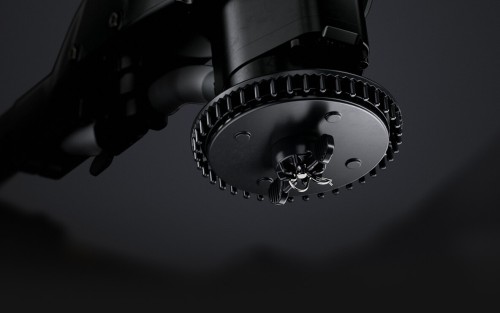
Droplets down to 50 μm push through dense canopy layers, reaching leaf surfaces that wider particle sizes miss entirely. A redesigned liquid flow path pulls heat away from the dual centrifugal motors during operation, keeping temperatures in check and extending the working life of the assembly.
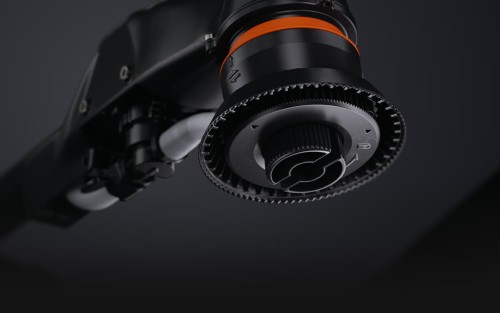
A reworked internal flow channel broadens particle output across a 50–500 μm range, making this the go-to sprinkler for the wide variety of crops and chemical types encountered across standard field operations.
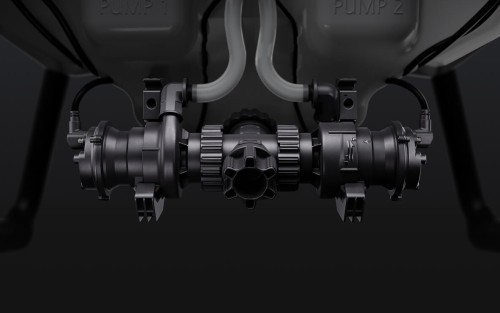
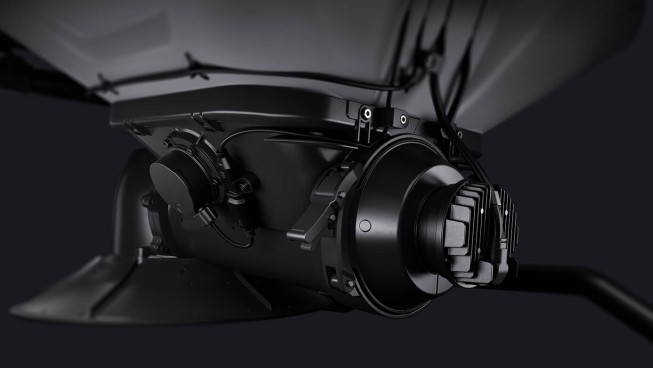
Built to handle aggressive agrochemicals without degrading, the magnetic drive design eliminates contact-based seal failure. The optimized impeller geometry and larger chamber volume sustain the high flow rates orchard operations require without the pump becoming a weak point.
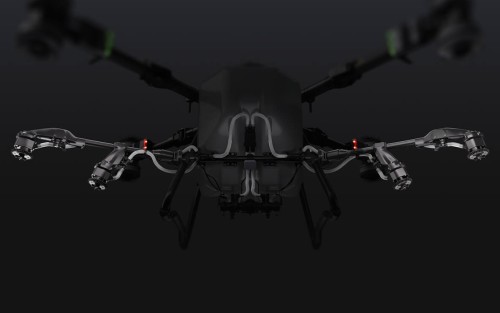
Four rear-mounted sprinklers spread the application width across orchard rows while keeping droplet distribution even across the full pass. Mist interference in the operator’s field of view is kept low, which matters more than it sounds when you’re navigating between trees at working speed.
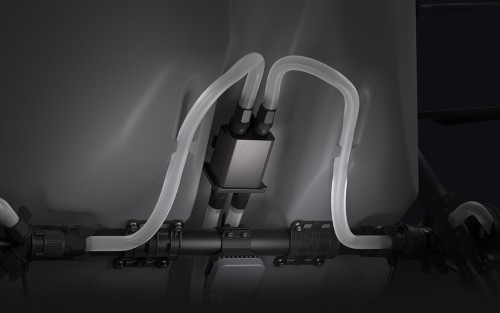
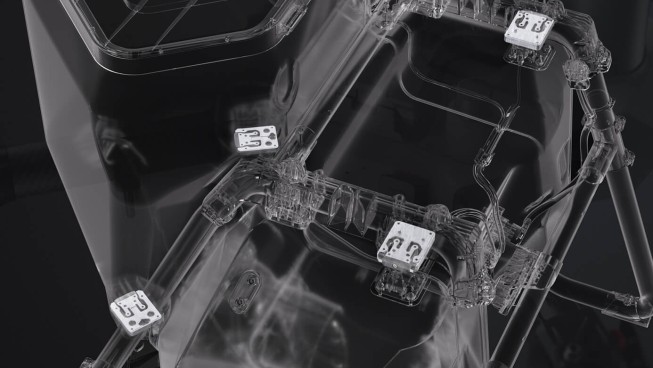
Flow rates are tracked and adjusted continuously in real time, holding application precision across the entire operation rather than just at the start. The electromagnetic sensor never contacts the liquid directly, which removes the corrosion risk that conventional flow meters face over a season of agrochemical exposure.
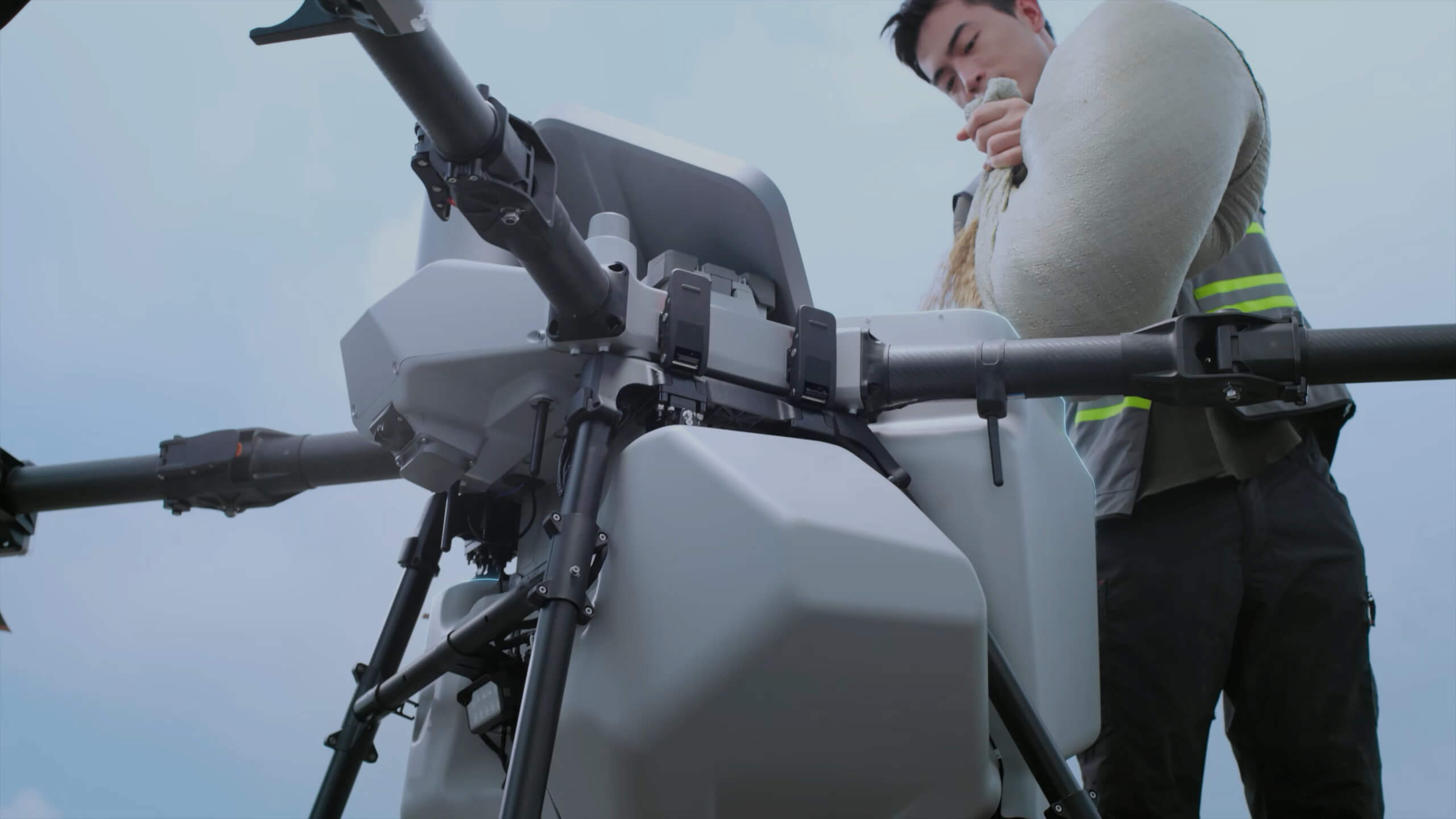
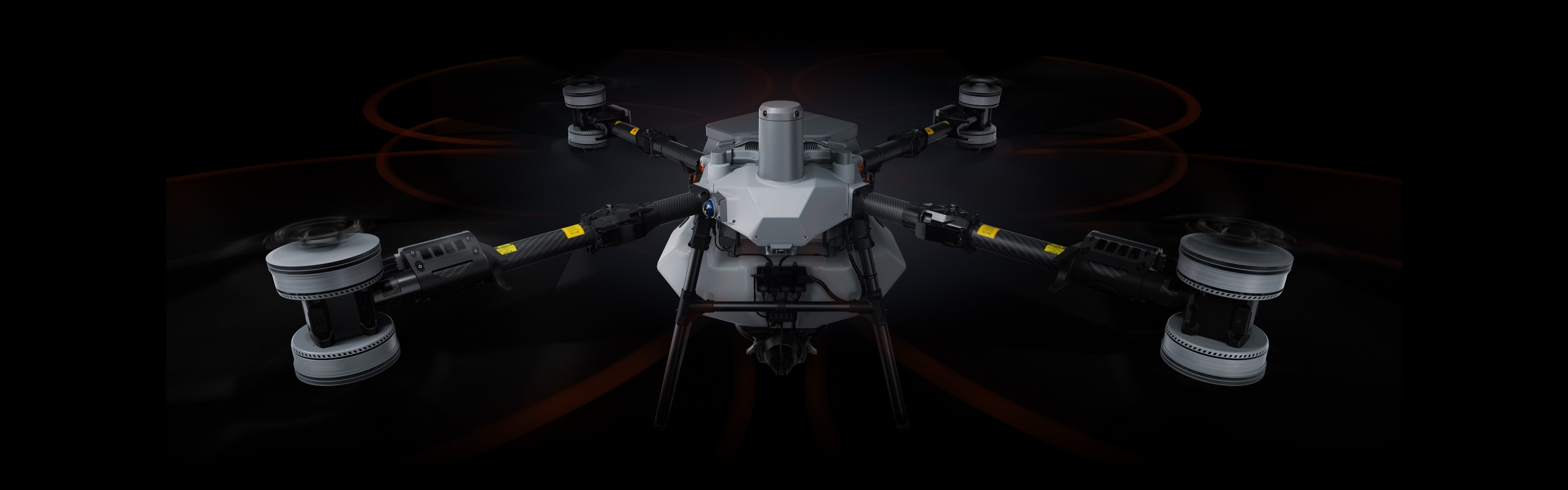
The spreading system on the T100 has been rebuilt from the ground up rather than just incremented. Load capacity doubled, flow rate climbed by 270%, and a redesigned screw feeder brought in compatibility with a much wider range of granular materials. Whether the job is large open fields, orchard rows, aquaculture ponds, or something else entirely, the system handles the variation without needing a workaround.
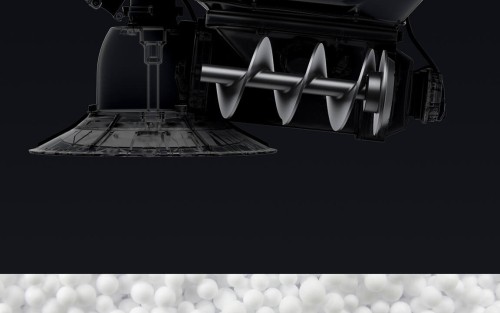
The new feeder geometry tightened spreading accuracy significantly while pushing flow capacity up by 270%. The range of compatible granular types expanded as well coarser materials, finer seeds, and everything in between feed through without bridging or inconsistent output.
The onboard weighing sensor tracks remaining granular load continuously, giving the operator an accurate read on quantity without guessing or stopping to check manually. Flow rate calibration runs automatically, and operation templates save to the cloud so returning to a field with the same crop, same material, and same parameters takes seconds rather than a full setup cycle.
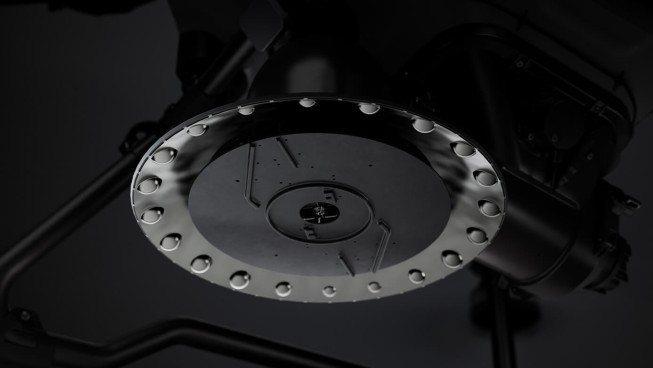
Distribution stays consistent from the first pass to the last, regardless of where in the flow range the system is operating. The stainless steel cap resists the wear and chemical exposure that would degrade a standard disc over a full season of use.
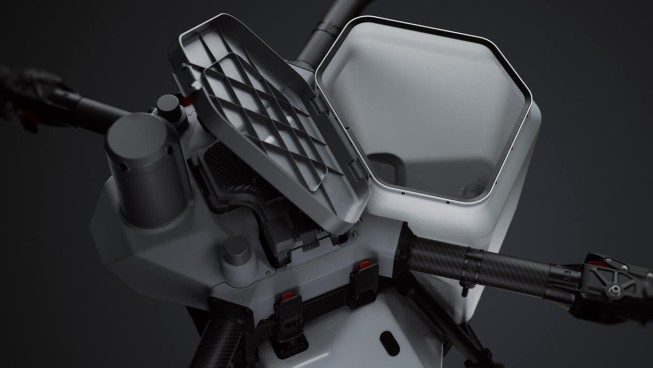
The wide-opening gate makes bulk loading practical in the field no funnelling required, no spillage from awkward angles. Refilling between passes stays fast so turnaround time doesn’t eat into the efficiency gains from the system itself.
Four feeder sizes swap in and out depending on what the material and application rate demand. Seeding, fertilizing, and feeding all have different particle characteristics and dose requirements this system handles them individually rather than forcing a compromise.
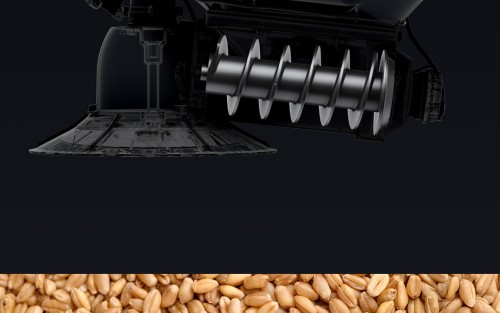
Sized for high-volume materials granular fertilizers, wheat seeds, granular fungicides, and bulk feed.
Handles application rates from 75 to 750 kg per hectare across particle sizes between 0.5 and 10 mm.
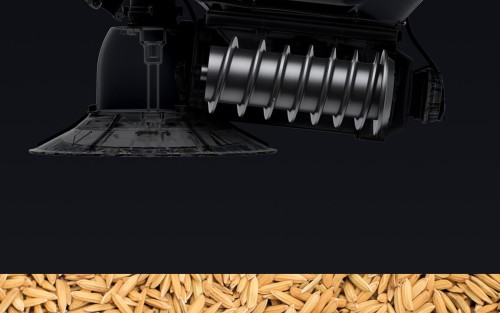
Well matched to rice seeds and cover crop varieties. Operates across application rates from 75 to 270 kg per hectare, with optimal performance for particles in the 4 to 10 mm range.
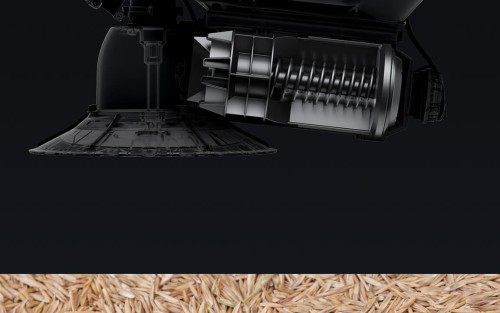
Calibrated for precise low-to-mid rate seeding work. Best suited to rice seeds at rates between 22.5 and 120 kg per hectare, with particle sizes in the 4 to 6 mm window.
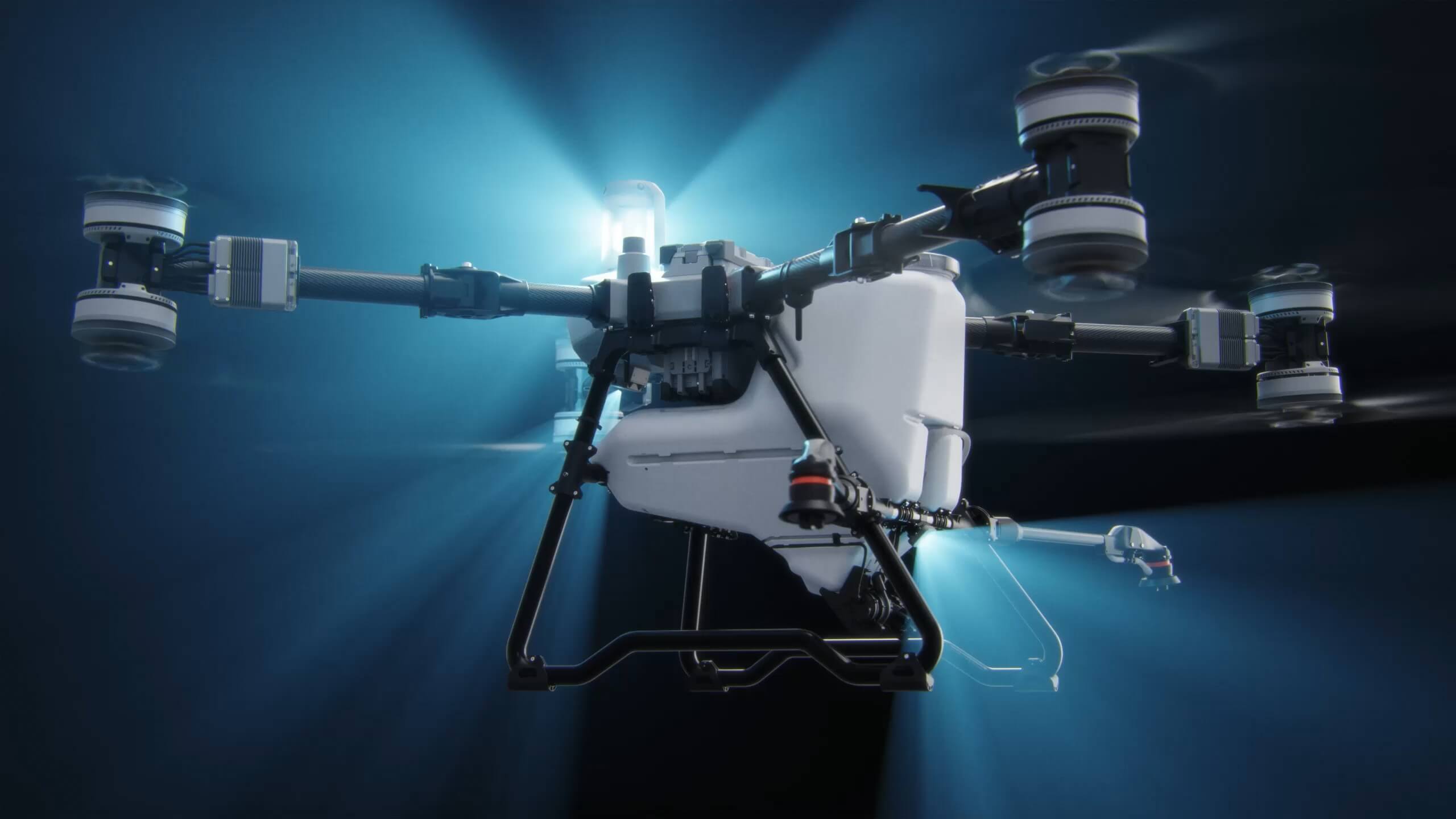
Built for low application rates with fine or small-particle materials rapeseed, grass seed, granular herbicides, and granular insecticides all fall in range. Application rates from 3 to 22.5 kg per hectare at particle sizes between 0.5 and 4 mm.
Three distinct sensor technologies LiDAR, millimeter-wave radar, and a Penta-Vision camera array work simultaneously on every flight. Rather than relying on any single system, the T100 fuses their inputs together, building a complete picture of the environment around the aircraft and identifying obstacles with a level of specificity that single-sensor systems can't match.
Forward-facing radar sweeps the vertical airspace 5,000 times per second while a full 360° horizontal mechanical rotation covers the surrounding area continuously. A dedicated rear radar extends detection coverage behind the aircraft, closing off the blind spot that front-only radar systems leave open.
Four directional cameras combined with a forward FPV low-light full-color unit give the operator live situational awareness in every direction front, rear, left, right, and directly below while the system simultaneously scans for obstacles in the same field of view. The FPV camera uses virtual gimbal stabilization to hold a smooth, wide-angle image even when the aircraft is working through turbulence or fast direction changes.
Nighttime operations got a proper lighting upgrade front-facing high beams extend visibility in the direction of travel, while downward supplemental lighting illuminates the working area below. Combined with the existing low beams, the T100 now has the coverage needed to work safely in low-light conditions without relying solely on sensor data.
Detection extends beyond obvious structures to cover the obstacles that actually cause incidents in agricultural operations utility wires, poles, high-voltage towers, isolated trees. When something is identified ahead, the system evaluates the geometry and selects a bypass path that keeps the mission moving rather than triggering a stop.
After the first pass over a field, detected obstacle positions are logged and stored. On return flights, the system already knows what’s there and begins planning around it earlier. A one-click save ties obstacles to a specific field profile, so every subsequent operation in that location runs with the benefit of the previous one.
A Pre-flight mapping isn’t a requirement for terrain following the T100 reads and responds to ground contour in real time, maintaining consistent application height across slopes as steep as 90°. Combined with live obstacle bypassing, it handles the uneven, interrupted terrain of hillside orchards and mountain plots without needing a pre-planned route for every variation.
LiDAR point cloud data streams live to the operator’s display, giving a spatial read on the surrounding environment that goes beyond what a camera feed alone can communicate. The depth and density of the point cloud makes small obstacles the kind that disappear in FPV footage visible and quantifiable. At night, when camera-based detection loses reliability, the LiDAR view holds its value.
Augmented reality overlays kick in from the moment the aircraft lifts off flagging people, vehicles, and poles during takeoff and landing when proximity risk is highest. In flight, the AR layer keeps updating with obstacle classifications and distances, so the operator has an annotated view of what’s ahead rather than having to interpret raw sensor data mid-operation.
Planned flight routes are projected as visible AR guides on the operator’s display, making it easy to follow the path accurately without constantly cross-referencing a map. For new plots or unfamiliar terrain, it takes uncertainty out of route adherence and helps maintain application consistency across the full area.
Return-to-home isn’t just an automatic function the AR system projects the landing zone location and safe descent path on screen so the operator can visually confirm what the aircraft is doing throughout. It’s particularly useful when landing in tight spaces or on uneven ground where a hands-off auto-land warrants extra attention.
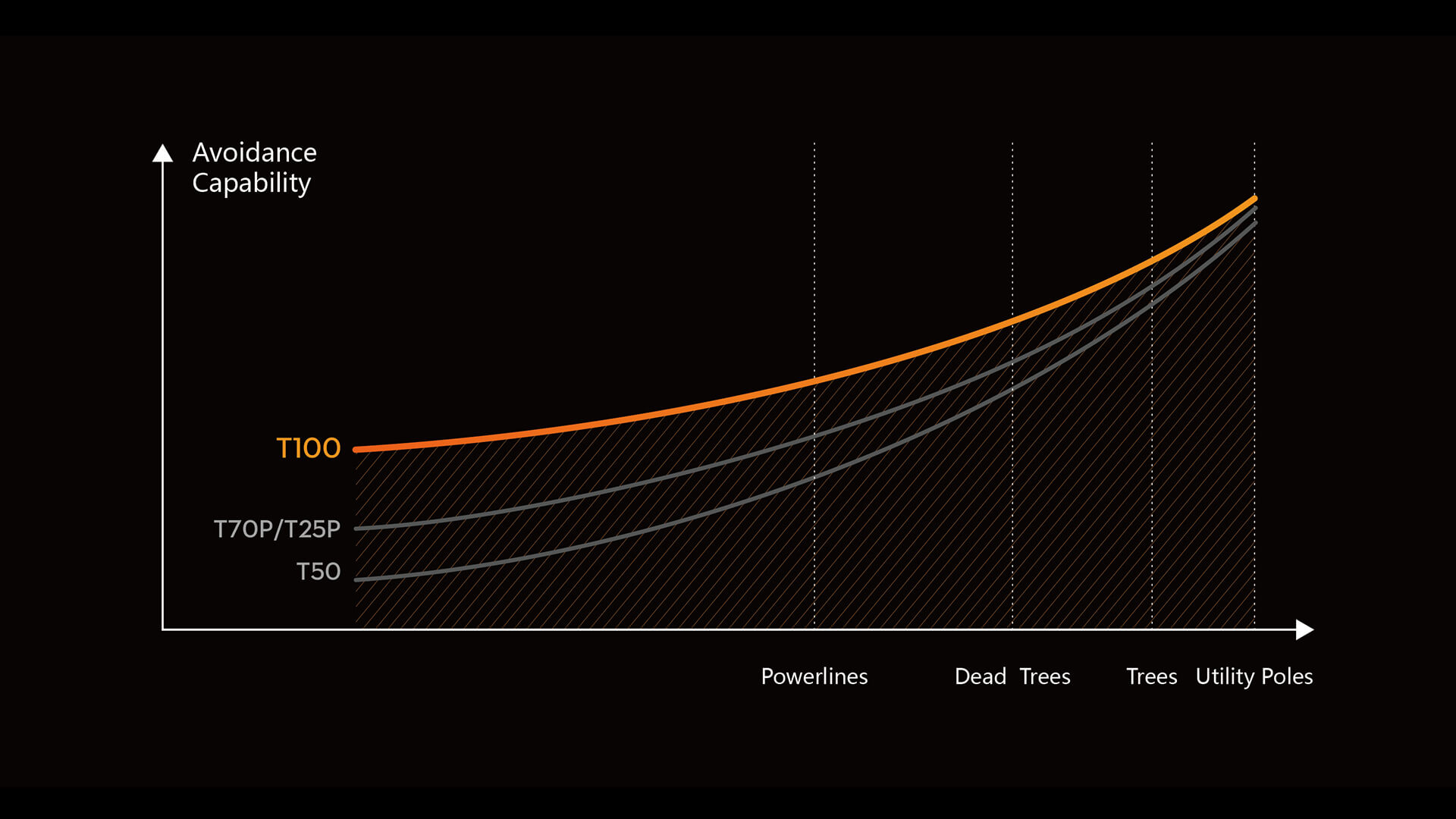
Multi-sensor fusion closes the gaps that any single detector leaves. The combined radar, LiDAR, and vision data runs through updated algorithms that improved both overall avoidance success rates and critically detection accuracy for the smaller obstacles that were previously harder to catch in time. The result is more reliable performance in the irregular, cluttered environments agricultural drones regularly encounter.[2].
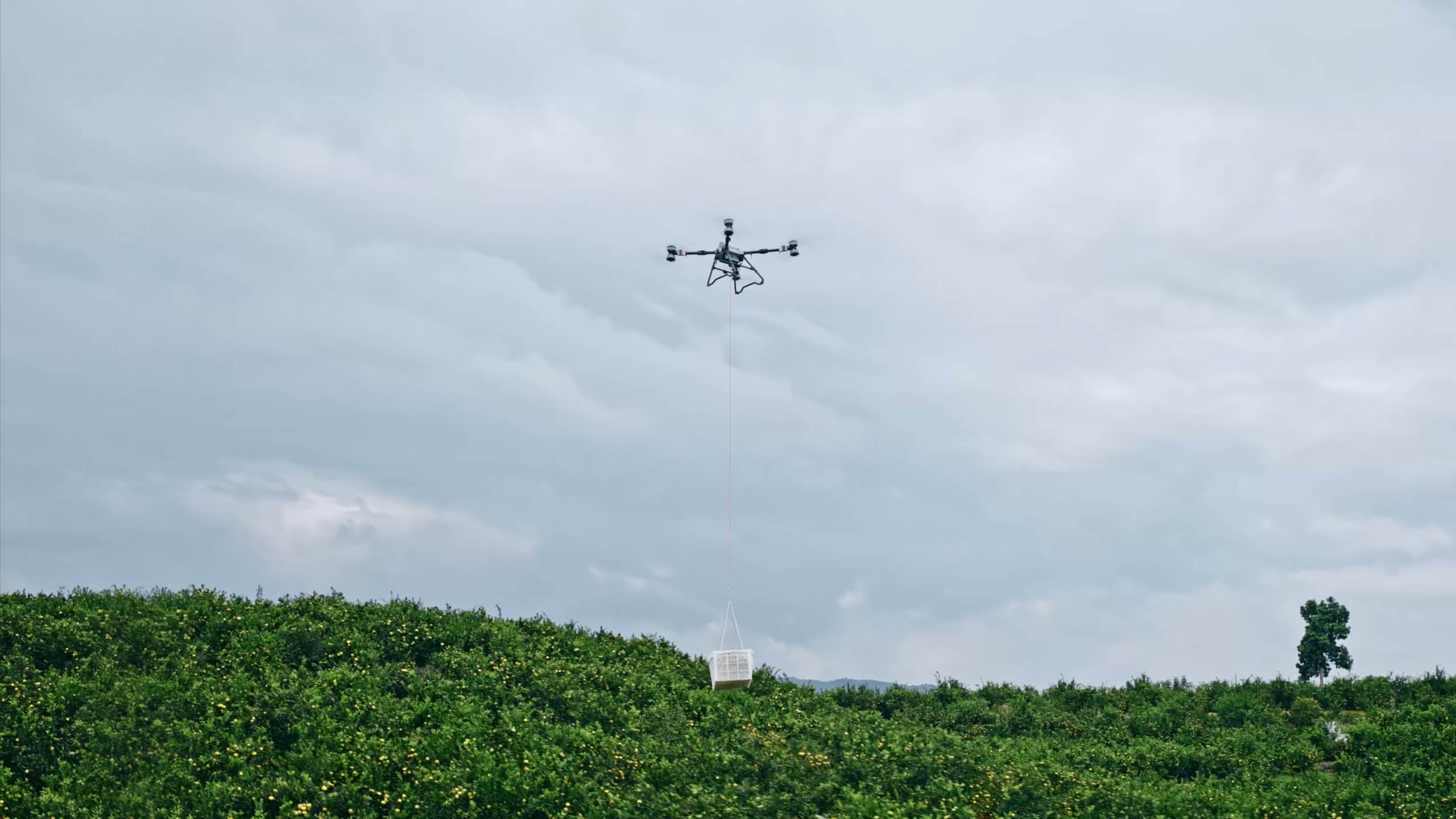
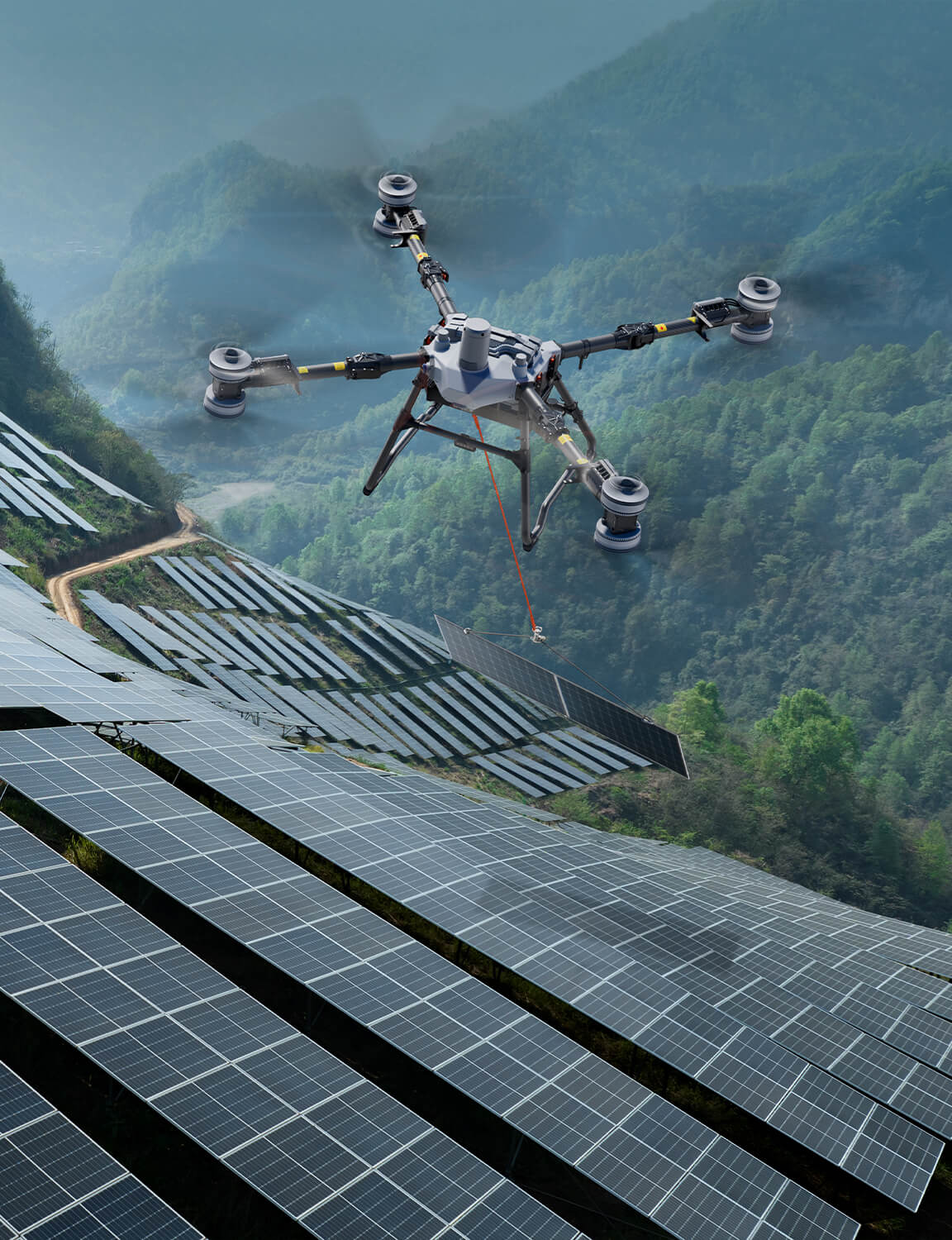
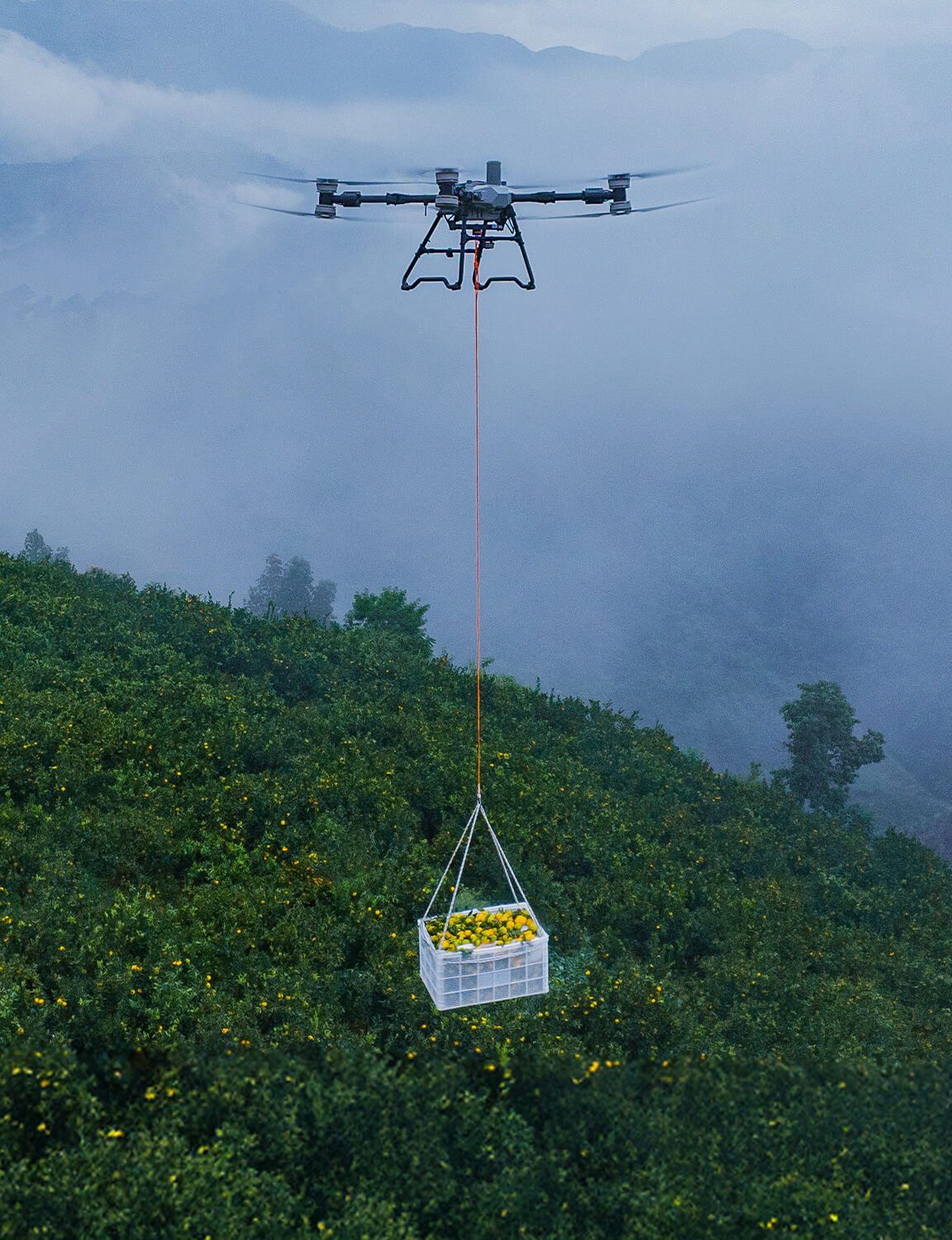
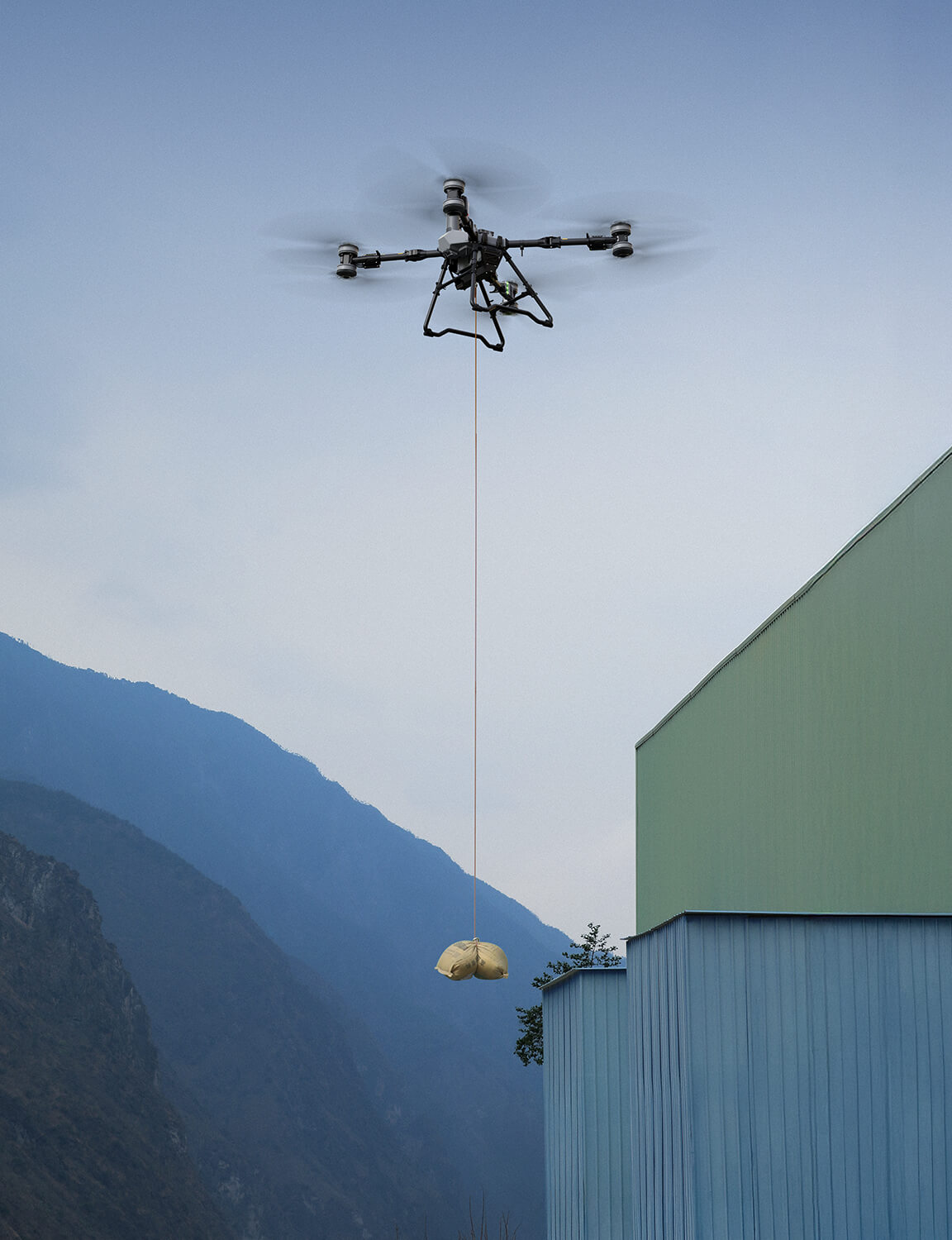
When spraying and spreading are done, the T100 doesn't sit idle it converts into a capable aerial transport platform. A 100 kg lifting capacity opens up the range of tasks significantly, from moving harvested fruit and planting materials to shuttling solar panels and building supplies across terrain where ground vehicles struggle. Automatic balance control, real-time load monitoring, and point-to-point navigation make it practical for operators who need repeatable transport runs without manually managing every flight.
A triaxial force sensor reads load movement continuously and feeds corrections back into the flight controller in real time. The result is a noticeably steadier aircraft swinging is actively dampened rather than just tolerated, which makes the load and the flight path more predictable throughout the transit.
The same sensor system that manages balance also tracks the actual load weight during flight. If the payload approaches the limit, the system flags it — preventing overload situations that could compromise control authority or battery margins before they become a problem.
Loading and unloading destinations get pinned via mobile phone using the RTK module for accurate positioning, then synced directly to the remote controller. On the controller screen, AR projection highlights exactly where the aircraft needs to go so pilots spend less time hunting for the right spot and more time completing runs.
Once loading and unloading points are set, a single input sends the aircraft on its way. No manual steering required between runs the system handles routing while the operator monitors and manages the operation overall.
For operations where longer flight time matters more than maximum payload, the optional dual battery configuration brings capacity to 80 kg while extending endurance significantly. In the rare event that suspended cargo gets caught or entangled, the cable can be heat-cut remotely freeing the aircraft without putting anyone on the ground at risk.

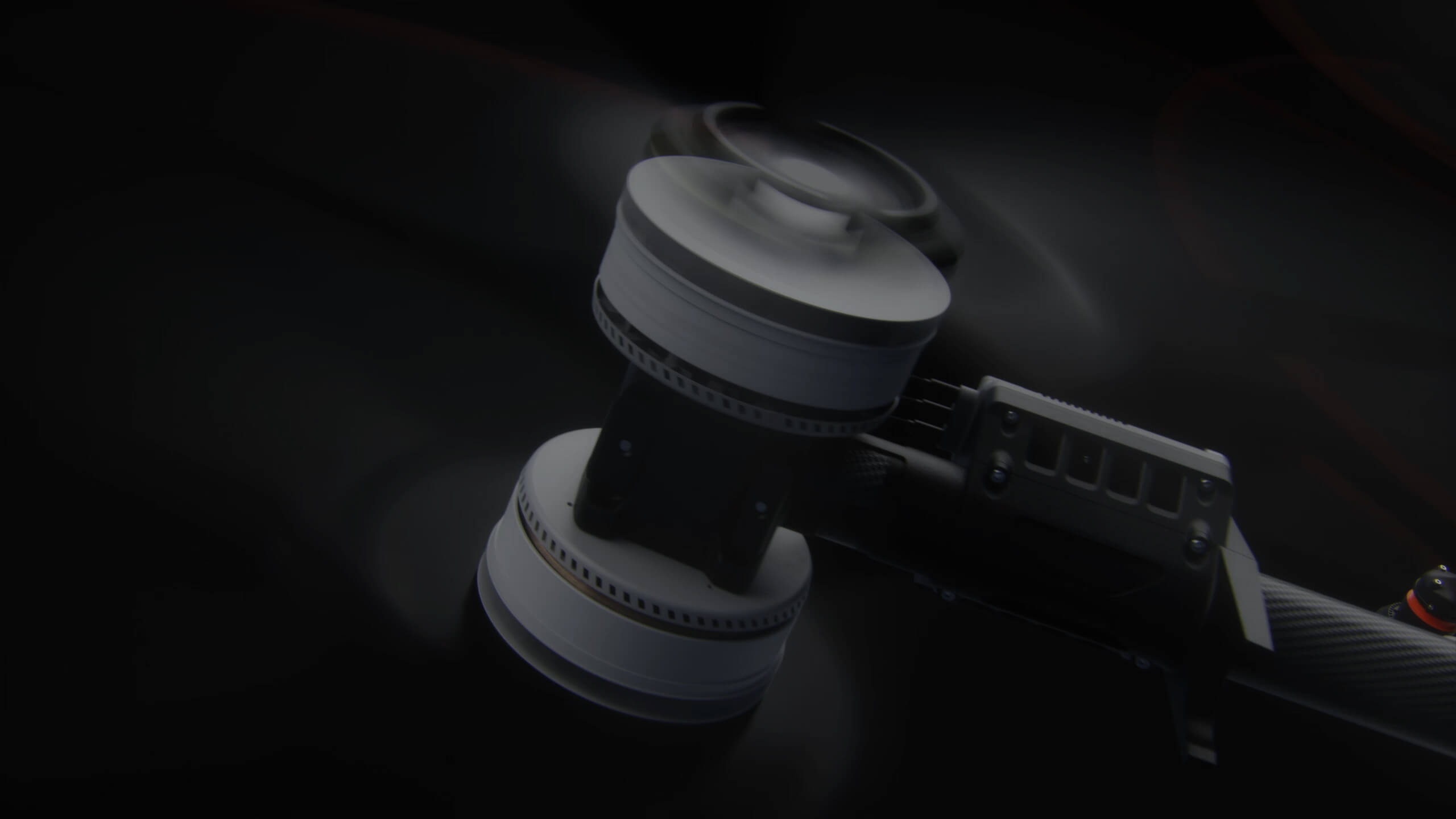
Coaxial dual-rotor architecture paired with large-diameter carbon fiber blades redefines what the T100 delivers in terms of raw thrust, fuel economy under load, and the kind of safety redundancy that matters when you're flying over crops or structures. Every element of the propulsion system was designed to perform in high-temperature conditions without sacrificing output.
82 kg Single-Axis Max Thrust
20 m/s Max Speed
Compact Size, High Load Capacity
39%[7] Increase in Full-Load Power Efficiency
Propeller Stop Protection
Low battery performance under heavy load
Increase in Spray Width[15]
Increase in Operation Speed[15]
Enhanced Penetration for Orchards
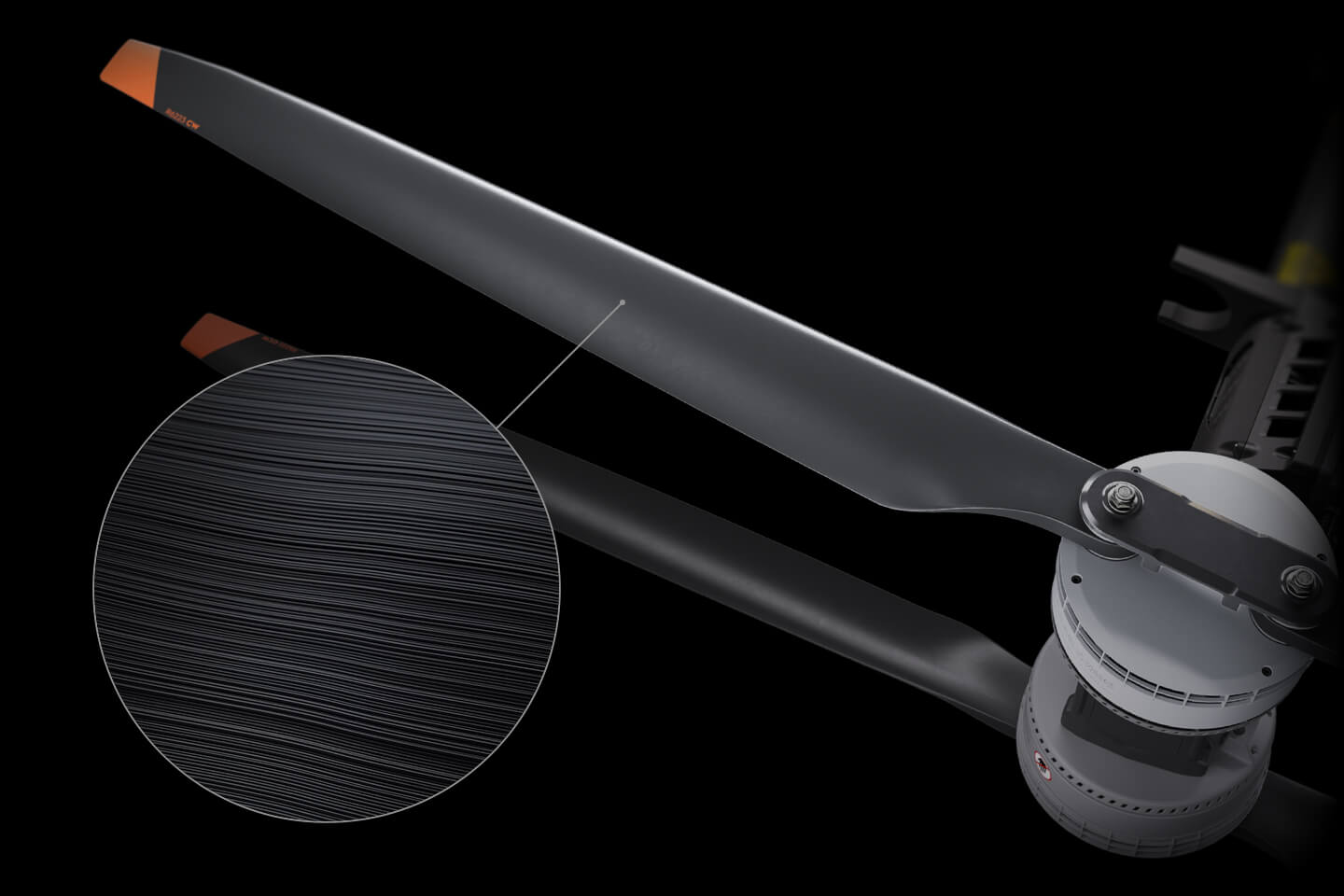
Larger diameter and a refined airfoil profile pushed efficiency up by 32% over previous propeller designs. The carbon fiber construction keeps weight low while holding dimensional stability under heat a meaningful advantage when operating in summer field conditions where composite blades on lesser drones start to flex and lose performance.
.
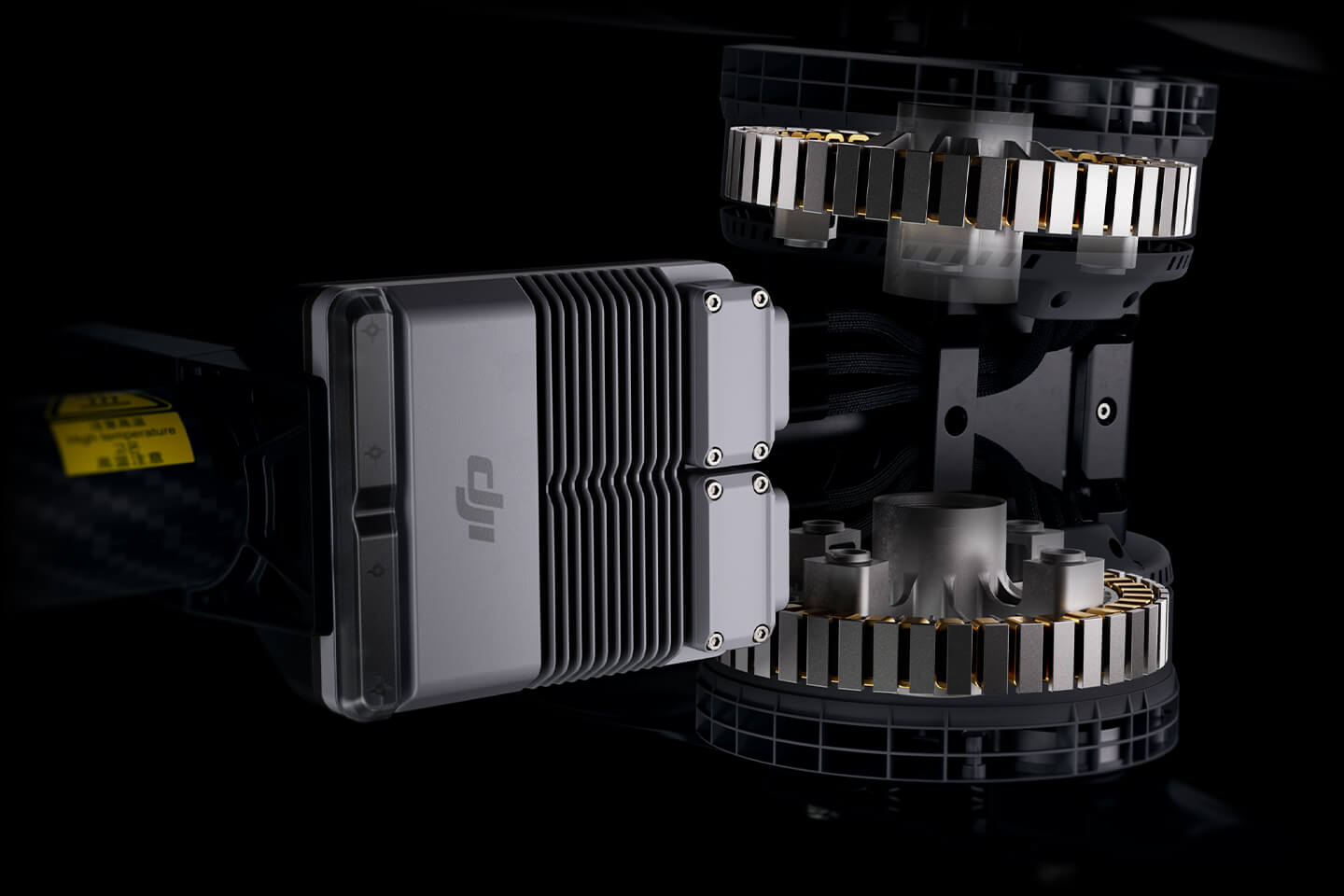
Bigger motors generate the torque needed to swing 62-inch blades at the speeds a 100 kg payload demands. The 420A electronic speed controllers back that up with fast, stable response smoothing out the rapid load changes that happen when the aircraft transitions between hover, acceleration, and terrain-following mode.

The RC Plus runs a 7-inch screen that's 16% brighter than its predecessor enough of a difference that glare and direct sunlight stop being reasons to squint or shade the display. Internal and external battery life both extended by 30 minutes, which adds up across a full day of operations. Backlit physical buttons make nighttime work manageable without extra lighting, and the customizable button layout lets experienced operators set up the controller in a way that matches how they actually fly.
Saved parameter templates pull up in a single tap application rate, flight height, speed, and spray width all pre-configured. For fields the operator has worked before, getting back in the air takes almost no setup time.
The T100 monitors tank level and battery state throughout the flight. When either hits the threshold, it returns to the home point on its own marking the position so the next flight can pick up exactly where the last one ended without missed coverage or overlapping passes.
Not every field follows a clean rectangular boundary or a single crop type. Free flight path mode handles mixed plantings, intercropped rows, curved paddy boundaries, and other real-world layouts that standard automated planning struggles with giving the operator the flexibility to work the field as it actually exists.
A single mapping flight covers up to 20 hectares of open ground or 10 hectares of orchard. The point cloud reconstructs in real time on the controller screen rather than requiring post-processing back at a workstation, and the higher density scan improved powerline detection rates by 80% a material difference in agricultural environments where wire strikes are among the most serious operational risks.
The O4 video transmission system runs an upgraded algorithm that prioritises link stability over raw bandwidth the practical result being that the signal holds up in the kind of broken terrain and obstructed environments where earlier transmission systems would degrade or drop. When signal conditions get difficult, O4 Relay steps in as an extension layer, maintaining the connection rather than accepting degradation as inevitable.
Centimeter-level RTK positioning without the coordinate configuration overhead. The D-RTK 3 AG pairs with the T100 in plug-and-play fashion, bringing precision ground referencing to operations where GPS-level accuracy would introduce drift across large areas.

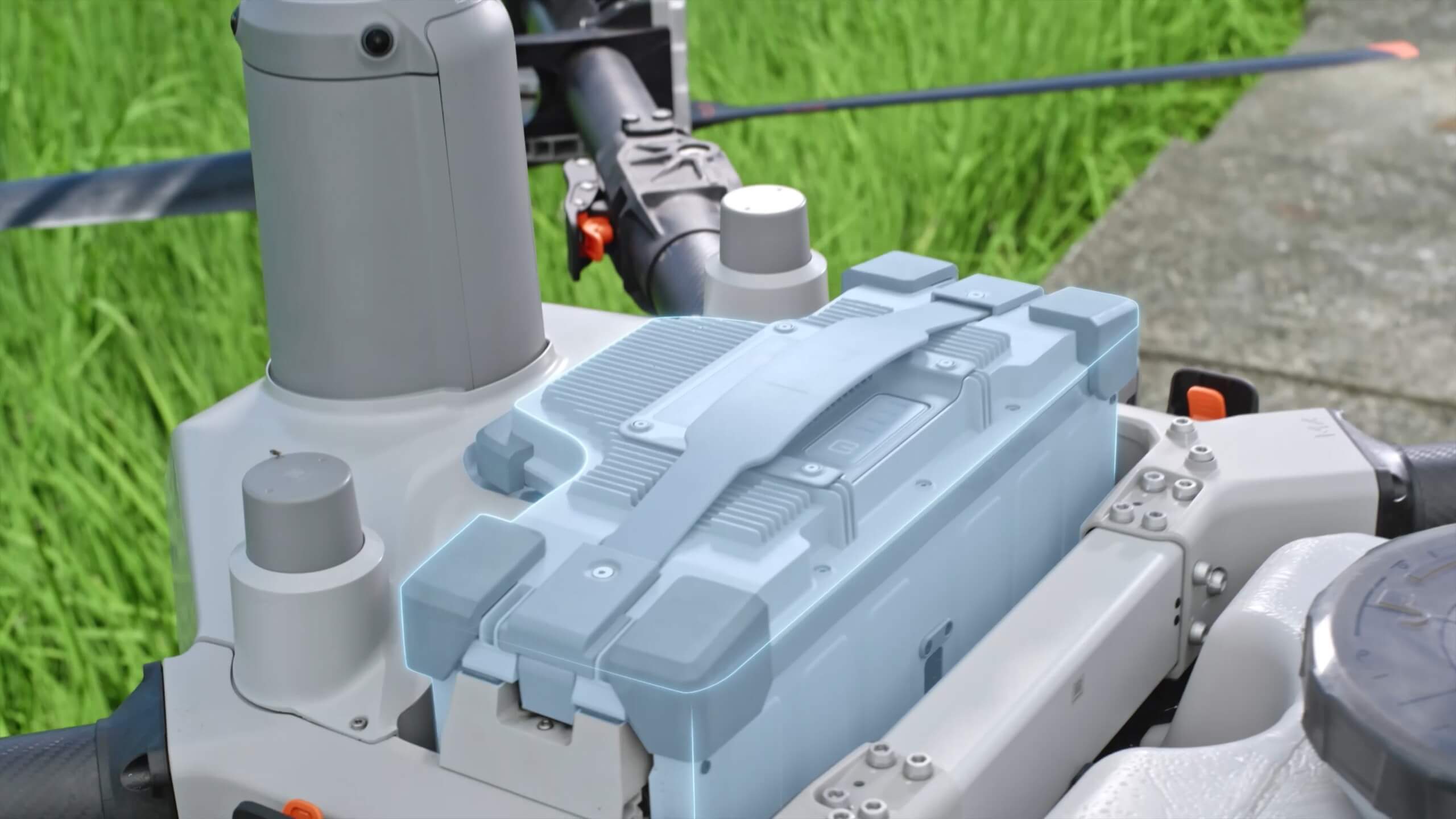
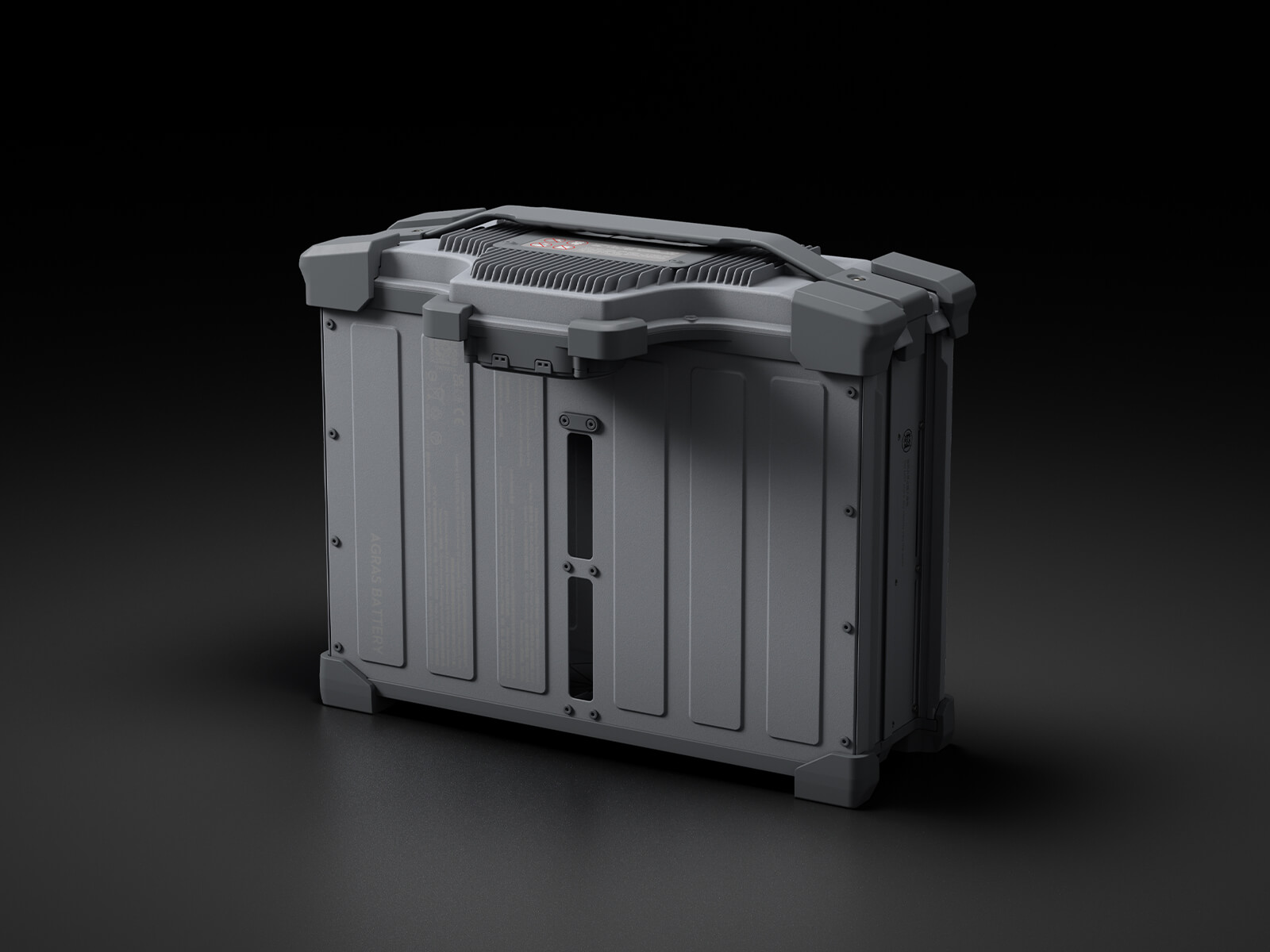
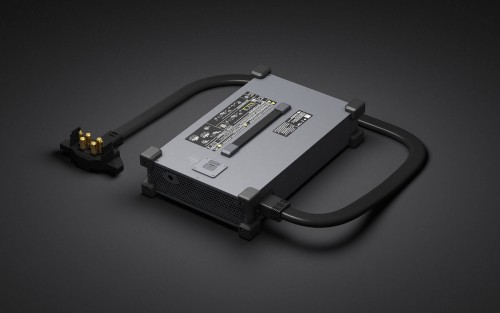
Higher capacity and a lighter physical build make the DB2160 a meaningful step forward from what came before. Charging times dropped significantly, and the energy draw per flight hour came down alongside. The triple air-channel cooling system keeps internal temperatures in range during operation by moving airflow through the pack continuously passive heat management that doesn't depend on ground time to recover battery health.
41 Ah
1500 charge cycles under warranty[19]
500 A high-power connector
Weight: 14.7 kg
Ergonomic handle
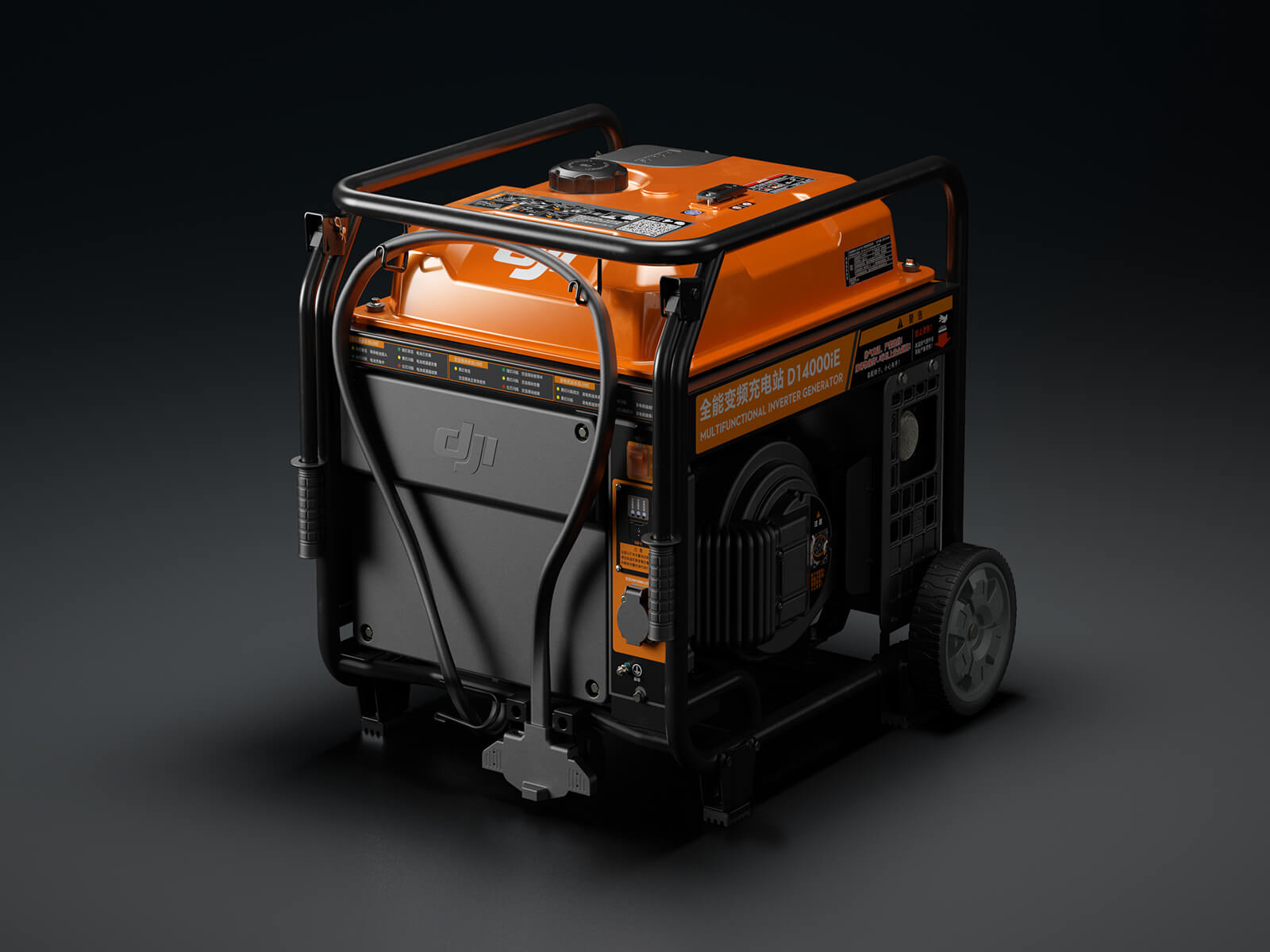
11500 W fast charging[20]
1500 W AC output
1.8 m charging cable
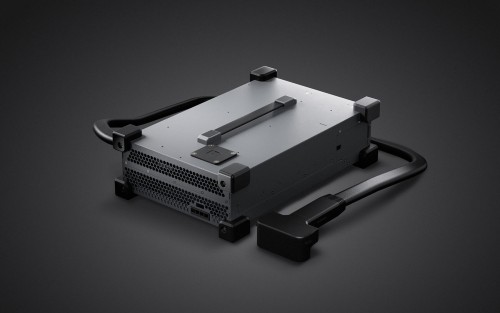
Single-phase power input
9000 W fast charging
Adaptive power protection
1.5 m charging cable
The DJI Agras T100 is available in the UAE from Aerosmart, Dubai, with configurations for spraying, spreading and lifting. Pricing depends on the battery, charger and sprinkler options selected request a same-day quote in AED.
The T100 carries a 100 L spraying tank, a 150 L spreading tank, or up to 100 kg as an aerial lifting platform one aircraft that switches between spraying, spreading and transport without changing drones.
Coverage depends on application rate and terrain, but with a 40 L/min spray flow, up to 20 m/s operating speed and fast battery charging, the T100 is designed for continuous large-scale field operations with minimal downtime between passes.
Yes. An optional water-cooled mist sprinkler produces droplets down to 50 μm that penetrate dense canopies, and terrain following works on slopes up to 90° suited to orchard and palm plantation conditions in the region.
Yes. Agricultural drone operations in the UAE require registration and operator approvals from the relevant aviation authorities. Aerosmart guides every buyer through the registration, training and compliance steps before deployment.
Your journey into the extraordinary begins here. Share your details for a personalized DJI Agras T100 quote and let your imagination soar.
✅ Thank you for reaching out. Your message has been successfully sent, and our team will get in touch with you shortly.