DJI Dock 3 | Drone-in-a-Box for Autonomous Operations Dubai, UAE
Aerosmart Drones | All types drones

Aerosmart UAV Trading L.L.C. is a tech company that specialises in drones and solutions in the UAE and across the GCC.

Our Office

Office 203, Al Tayer Commercial Building,
Rolla Street, Bur Dubai, UAE

Follow Us

DJI’s First Dock Adaptable for Vehicle Mounting

DJI Dock 3

Rise to Any Challenge

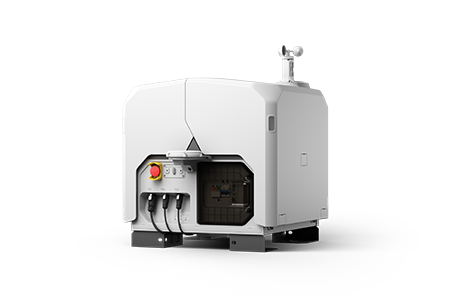
Paired with the Matrice 4D or Matrice 4TD, the DJI Dock 3 opens up round-the-clock autonomous operations without requiring a ground crew on standby. What sets it apart from previous dock generations is the ability to mount it on a vehicle giving organisations the option to move their aerial infrastructure rapidly to wherever the mission demands, rather than waiting for a fixed installation to cover that ground. The Matrice 4D and 4TD share the same proven camera platform as the Matrice 4 Series while delivering stronger flight performance and improved environmental protection. Both can also break away from the dock entirely and operate independently with the DJI RC Plus 2 Enterprise controller. Connected to DJI FlightHub 2, the whole system runs with a level of operational intelligence that meaningfully reduces the time and personnel cost of managing complex aerial programs.

Flexible Deployment, Ultra-Long Transmission
High-Performance Drones
Master All Environments
Efficient Operation with Intelligent Features
Enhanced Experience with Advanced Software
Secure and Compliant, Open Ecosystem

Master All Environments

Heat Resistant

High ambient temperatures don’t interrupt operations. The Dock 3 maintains full functionality including active charging at temperatures up to 50°, which covers the peak summer conditions across the Gulf region without requiring thermal management workarounds or operational restrictions during the hottest part of the day.

50°C
Highest Operating Temperature

Cold Resistant

For deployments in cold-climate environments or high-altitude sites, the Dock 3 brings its systems up to operating temperature through an active preheating cycle and then holds stable performance down to -30°C. Critical inspection and monitoring missions don’t stop because temperatures drop and the Dock 3 is built to reflect that.

-30°C
Lowest Operating Temperature

Wind Resistance

The Matrice 4D and 4TD hold controlled takeoff and landing in winds up to 12 m/s and sustain up to 32 minutes of airborne operation in those conditions. For coastal sites, exposed infrastructure, and elevated terrain where wind loading is a regular operating reality, that tolerance keeps missions running when lighter platforms would be grounded.

12m/s
Max Wind Speed Resistance

Rugged and Dependable

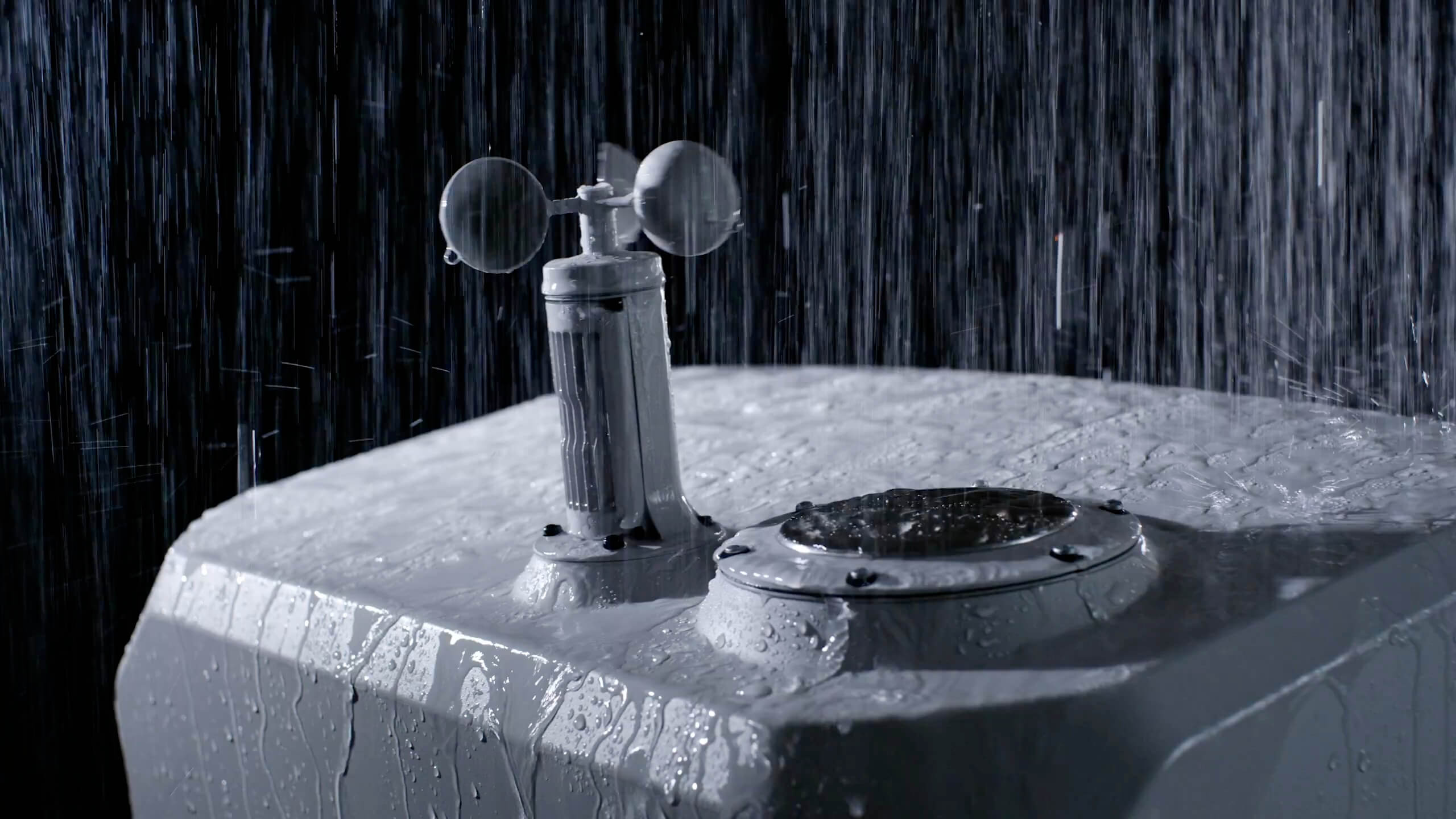
DElectronic components inside the Dock 3 are fully encapsulated against the environment dust, moisture, and weather fluctuations don’t reach the systems that matter. The Dock 3 holds an IP56 rating; the Matrice 4D and 4TD carry IP55. Both ratings reflect hardware that was designed to live outdoors permanently, not hardware that tolerates outdoor conditions as an afterthought.

IP56
DJI Dock 3
IP55
DJI Matrice 4D/4TD

Low-Noise and Anti-Ice Propellers

Anti-ice propellers come standard on both the Matrice 4D and 4TD, allowing stable flight to continue through freezing rain conditions that would compromise standard blade designs. The low-noise profile reduces acoustic footprint during operations relevant for urban deployments, public safety missions, and any scenario where attracting unnecessary attention works against the operation.

Flexible Deployment, Ultra-Long Transmission

Where previous dock systems required careful, permanent site selection to guarantee signal quality, the Dock 3 builds flexibility into the architecture. Fixed installations can be paired with the D-RTK 3 Relay positioned at elevation to address obstruction issues and extend transmission coverage, which frees the dock itself to be placed wherever the operational footprint needs it rather than where signal alone permits. Initial deployment setup runs through the DJI Enterprise app on a smartphone no specialist equipment or technician required. For situations where fixed infrastructure isn’t the answer at all, vehicle-mounted deployment changes the equation entirely, letting the dock travel to the mission rather than waiting for the mission to come within range.

Fixed-Mounted Deployment

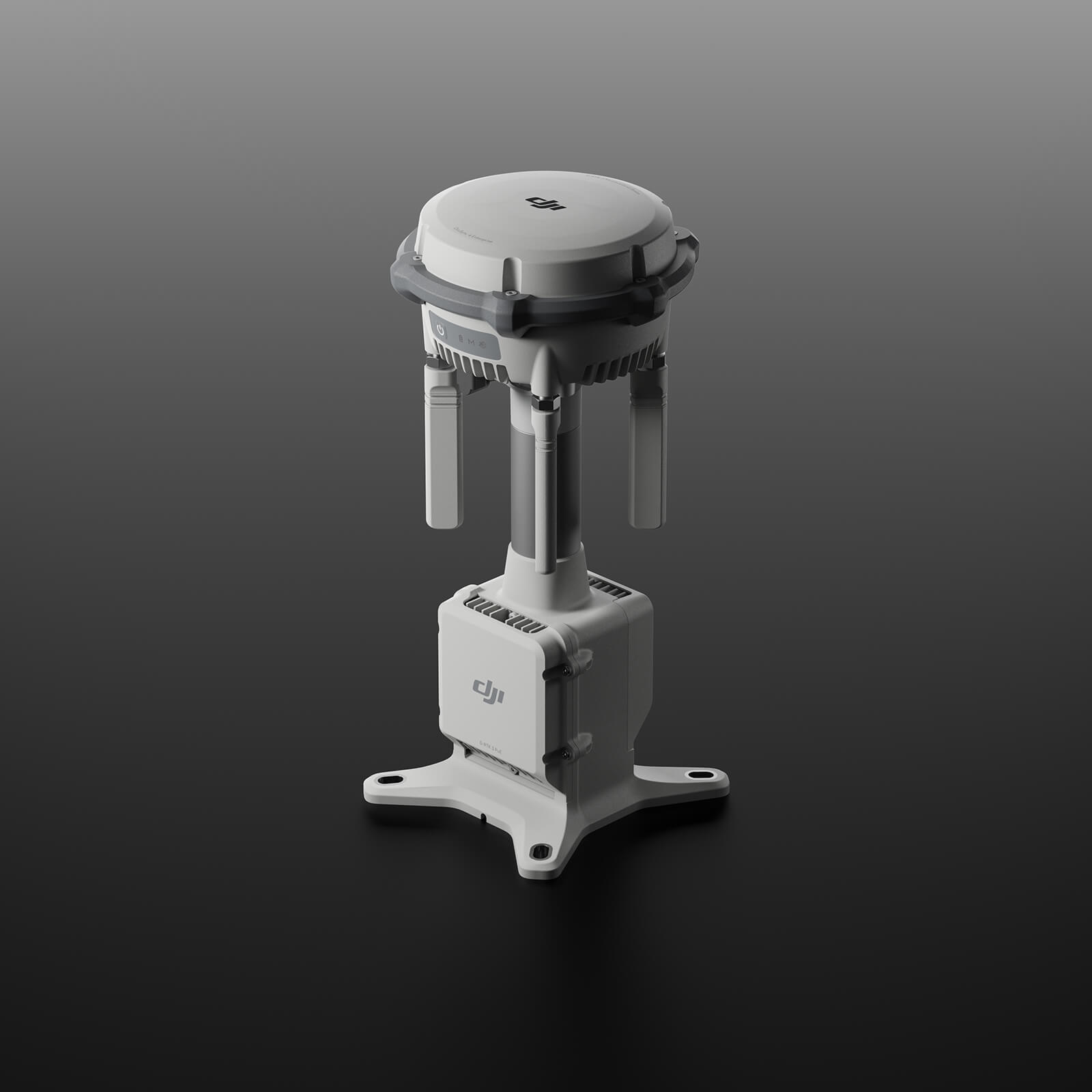
The D-RTK 3 Relay Fixed Deployment Version handles the two signal challenges that constrain most fixed dock installations  interference affecting video transmission and obstruction affecting satellite acquisition. Mount it at height above the surrounding clutter and both problems resolve at the source. The maximum transmission distance extends to 25 km from that elevated position, which opens up site selection options that signal constraints would previously have ruled out. Dock 3 goes where the operation needs it, not where the signal happens to be clear at ground level.

Near High-Rise Buildings [30]

Urban and industrial environments with dense vertical structures create interference and blockage patterns that ground-level equipment can’t overcome. A rooftop-mounted D-RTK 3 Relay rises above that noise, restoring signal quality and making it viable to place the Dock 3 directly alongside high-rise buildings or substation perimeter walls where access and security requirements demand proximity.

Near Communication Towers [5][30]

Communication towers generate RF interference that creates exactly the kind of signal environment where standard dock installations struggle. Attaching the D-RTK 3 Relay directly to a nearby tower turns that challenge into an advantage the relay sits in a strong position above interference sources and delivers clean signal quality, keeping takeoff and landing procedures safe and predictable even in frequency-congested locations.

Mobile Vehicle-Mounted Deployment

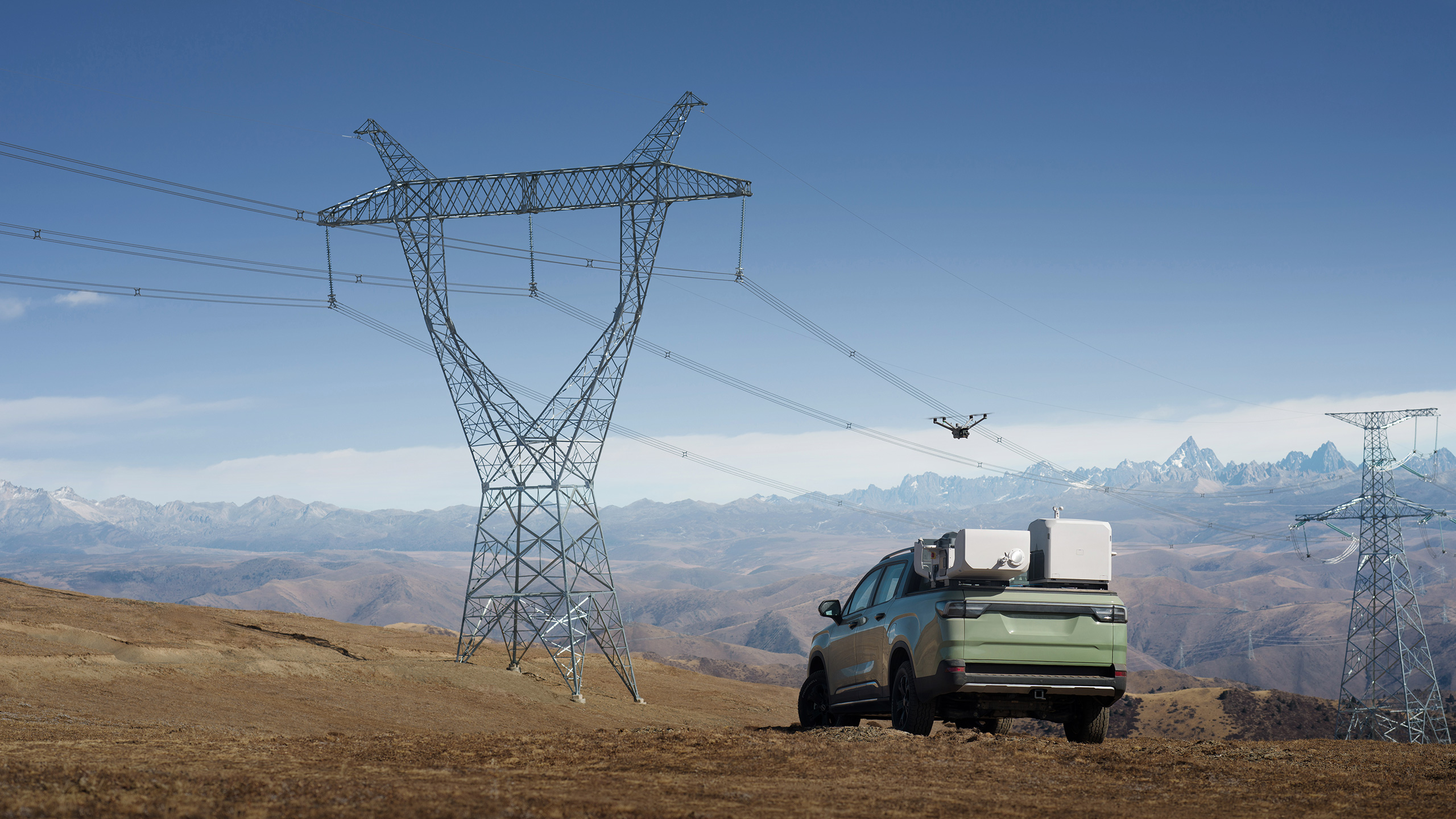
Vehicle mounting is a fundamental capability shift for dock-based drone operations. The Dock 3 is the first DJI dock built to support it properly not as an adaptation of fixed-mount hardware, but as a design that went through dedicated vehicle vibration testing across the structure, components, and air conditioning system. Horizontal calibration and cloud-based dock location calibration are built in to handle the positioning variables that come with a platform that moves between sites. For emergency response, long-distance corridor inspections, or any scenario where fixed infrastructure simply isn’t viable in the available timeframe, the Vehicle-Mounted Gimbal Mount brings the Dock 3’s full capability to wherever the vehicle can reach..

When the vehicle is repositioned, personnel managing operations remotely through DJI FlightHub 2 can update the dock’s registered location and push new task assignments from their workstation without anyone needing to be physically at the vehicle. Field and control room work in parallel rather than sequentially, which keeps the operational tempo high during time-critical deployments.

Two Dock 3 units can mount on a single vehicle and operate simultaneously. A coordinated takeover pattern manages the alternating flight cycles between the two docks, preventing any overlap in airspace that could create a collision risk. The result is continuous aerial coverage from one vehicle position one aircraft lands and recharges while the other is airborne without requiring manual coordination between launch cycles.

Alternating between two aircraft in a continuous hover-and-rotate pattern keeps live aerial footage streaming without interruption the moment one drone starts its return, the other is already airborne and on station. In emergency response deployments where the situation on the ground is evolving, that continuous feed matters. An optional spotlight payload extends the capability into night operations, providing sustained full-area illumination from above throughout the incident.

High-Performance Drones

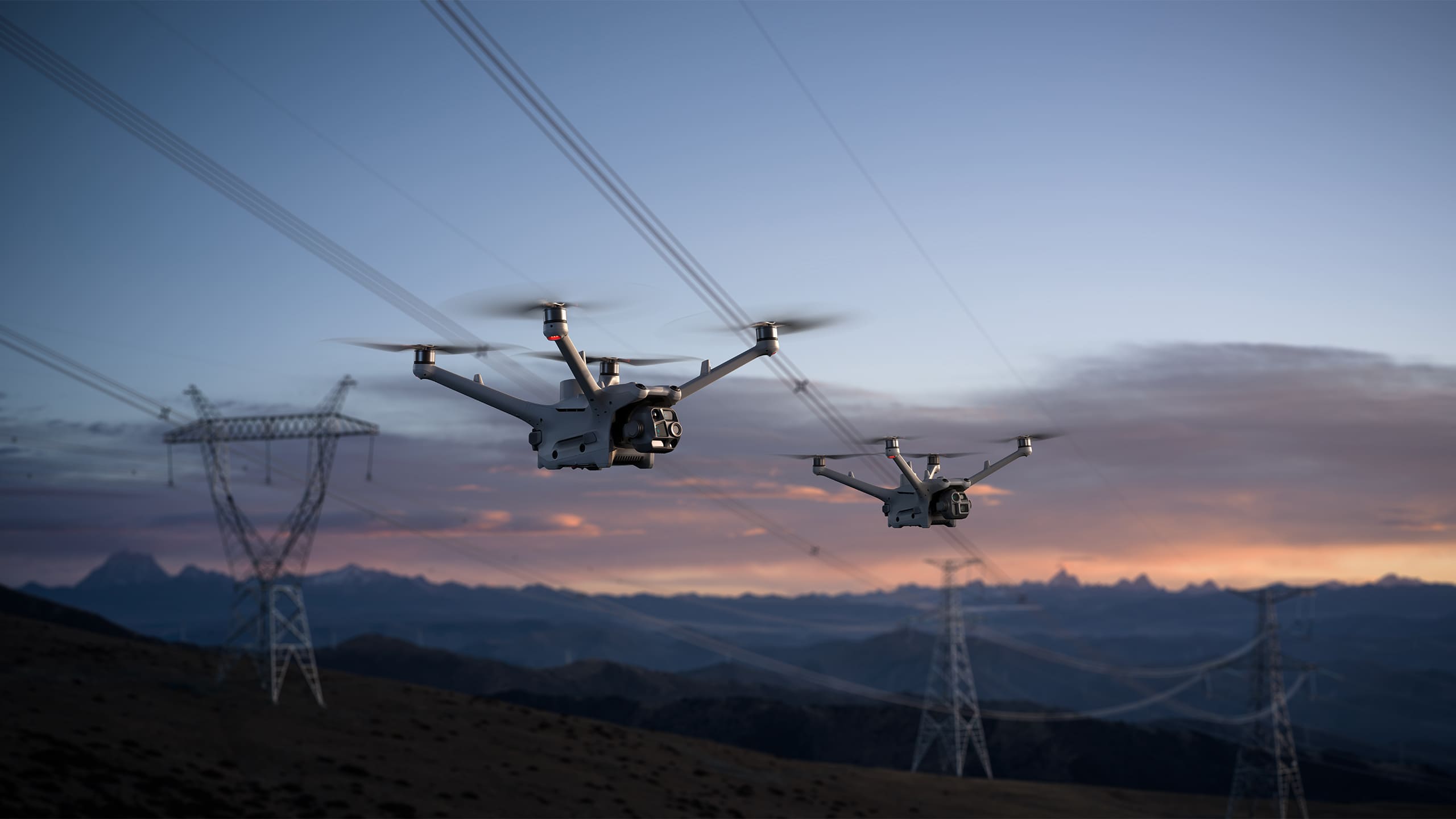
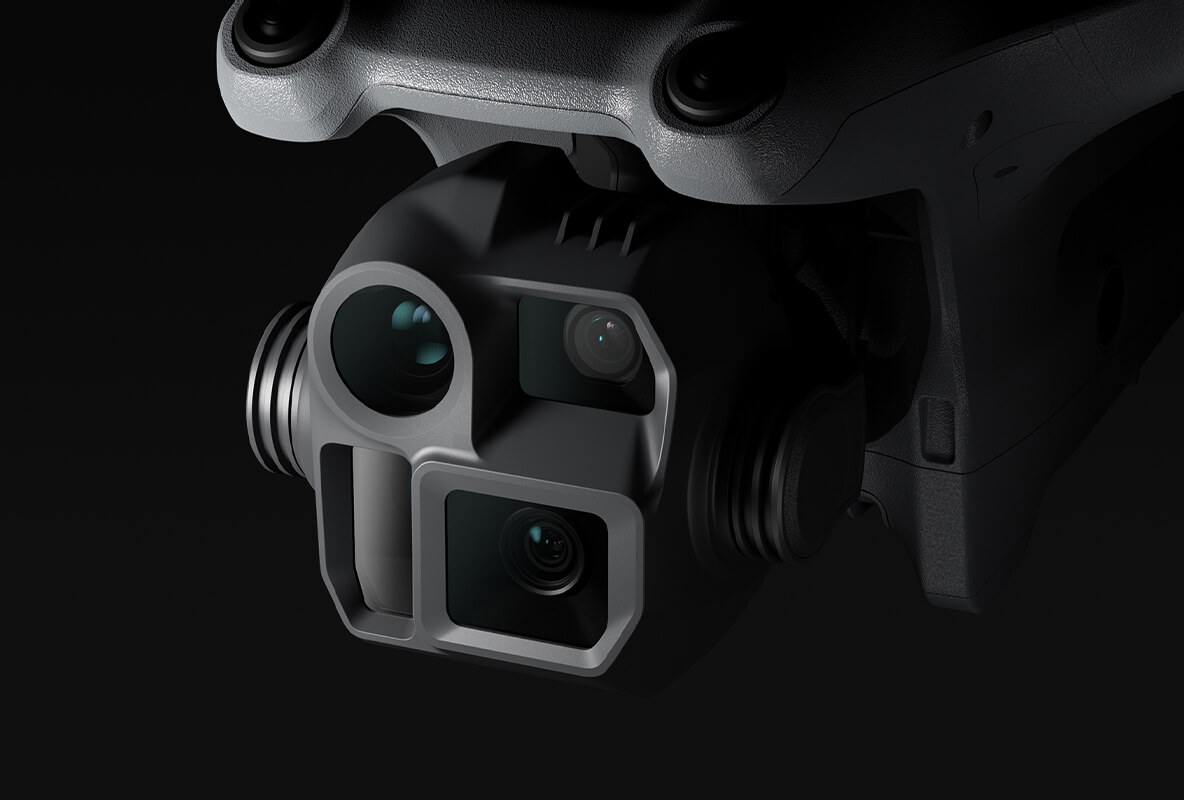
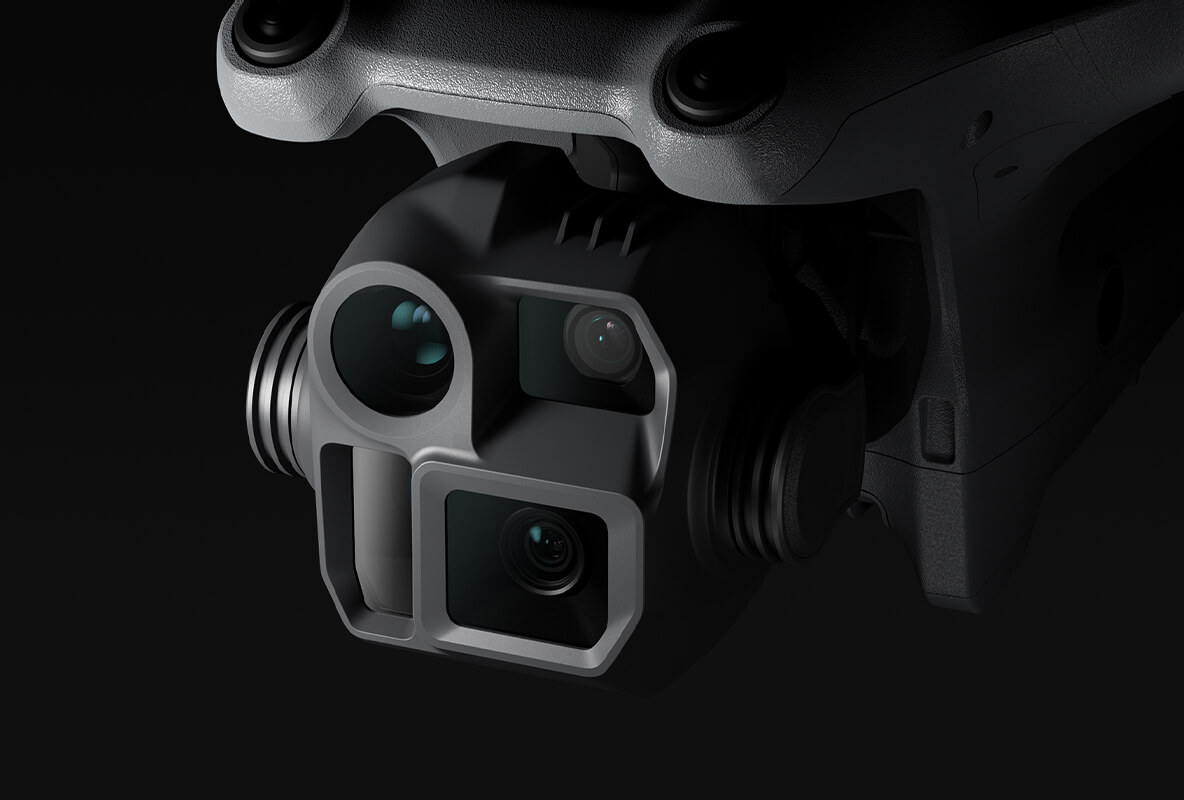
The Matrice 4D and 4TD were developed specifically as the aircraft counterpart to the Dock 3 system not adapted from an existing platform, but engineered alongside it. Both carry IP55 dust and water resistance and come with a three-camera array plus a Laser Range Finder as standard. Where they diverge is in specialisation: the Matrice 4D is the mapping and surface inspection variant, delivering high-precision photogrammetry results across the wide-angle, medium tele, and tele focal lengths. The Matrice 4TD adds a thermal infrared camera and an NIR auxiliary light for night illumination out to 100 metres, which opens the platform to infrastructure inspection, emergency response, and public safety operations that require round-the-clock capability beyond what optical cameras alone can provide. Both aircraft also step outside the dock workflow entirely when needed, pairing with the DJI RC Plus 2 Enterprise for fully manual standalone deployment.

DJI Matrice 4D

DJI MATRICE 4D

Wide-Angle Camera
  • 4/3 CMOS
  • 20MP Effective Pixels
  • f/2.8–f/11
  • 24mm Format Equivalent
Medium Tele Camera
  • 1/1.3-inch CMOS
  • 48MP Effective Pixels
  • f/2.8
  • 70mm Format Equivalent
Tele Camera
  • 1/1.3-inch CMOS
  • 48MP Effective Pixels
  • f/2.8
  • 168mm Format Equivalent
Laser Range Finder
  • Measurement Range: 1800 m (1 Hz);
  • Oblique Incidence Range (1: 5 Oblique Distance): 600 m (1 Hz)
  • Blind Zone: 1 m
  • Range Accuracy (m): ± (0.2 + 0.0015 × D) [7]
DJI Matrice 4TD

DJI MATRICE 4TD

Wide-Angle Camera
  • 1/1.3-inch CMOS
  • 48MP Effective Pixels
  • f/1.7
  • 24mm Format Equivalent
Medium Tele Camera
  • 1/1.3-inch CMOS
  • 48MP Effective Pixels
  • f/2.8
  • 70mm Format Equivalent
Tele Camera
  • 1/1.3-inch CMOS
  • 48MP Effective Pixels
  • f/2.8
  • 168mm Format Equivalent
Laser Range Finder
  • Measurement Range: 1800 m (1 Hz);
  • Oblique Incidence Range (1: 5 Oblique Distance): 600 m (1 Hz)
  • Blind Zone: 1 m
  • Range Accuracy (m): ± (0.2 + 0.0015 × D) [7]
NIR Auxiliary Light [9]
  • 6° FOV, 100m [10] Illumination Distance
Infrared Thermal Camera [8]
  • 640×512 Resolution
  • f/1.0
  • 53mm Format Equivalent
  • Uncooled VOx Microbolometer
  • Supports UHR Infrared Image mode

Longer Flight Time, Robust Protection

A full charge gets the Matrice 4D and 4TD to 47 minutes of flight at 15 m/s a 37% increase in operational endurance over the previous generation. At a 10 km operational radius, 18 minutes of productive flight time remains after transit, which is enough to complete a structured inspection route rather than a quick pass and return. IP55 across both models means the aircraft holds up through the same environmental conditions the Dock 3 is rated for, keeping the whole system consistent when conditions get harsh.

54Minute
Forward Flying
47Minute
Hovering
IP55
Protection

Obstacle Sensing for Safe Operation

The optional Obstacle Sensing Module brings together rotating LiDAR and millimeter-wave radar in a combined detection package that resolves obstacles down to 12mm diameter the threshold needed to reliably detect utility wires before they become a collision risk. That precision holds at operating speeds up to 15 m/s, which means the system doesn’t require the aircraft to slow to a crawl through complex power line environments. Low-light positioning gets the same sensor-fusion benefit, keeping the aircraft accurately located in conditions where optical positioning systems lose reliability. For power grid inspection and substation work where the consequences of a missed wire detection are severe this level of sensing coverage is what makes autonomous operations genuinely safe rather than just technically possible.

Unmatched Clarity and Precision for Any Task, Anytime

Excels in Low-Light Environments

Four high-resolution low-light fisheye lenses on the Matrice 4D Series give the positioning and obstacle sensing systems the visual data they need to function reliably after dark not as a degraded capability but as a fully operational mode. Night Scene delivers full-colour night vision for the operator, making situational awareness at night genuinely comparable to daylight operations. The Matrice 4TD extends this further with an IR-Cut Filter for black-and-white night vision, an NIR auxiliary light reaching out to 100 metres for active scene illumination, and a thermal camera that steps up to 1280×1024 in UHR Infrared Image mode covering everything from human detection to fine temperature gradient analysis across the 24-hour cycle.

Clear Vision and Stable Images

Medium-range inspection capability starts with the medium tele camera, which identifies physical defects like pin failures and surface cracks from 10 metres and reads instrument panel data at substation distances with enough clarity to be operationally useful. For longer-range detail work, the 48MP tele camera extends that capability out to 250 metres  capturing signage, serial numbers, and structural features at distances where approaching closer isn’t safe or permitted. The Matrice 4TD’s tele camera adds an 80-degree upward gimbal tilt in hover, which brings bridge underside defects into direct view without requiring the aircraft to fly beneath the structure. Foreground stabilisation on both tele cameras keeps the subject steady during telephoto shots at 10x zoom and beyond, which is where stabilisation actually matters for inspection image quality.

Seamless Airborne Relay for Mountainous Terrains

In terrain where 4G signal is unavailable and obstructions block direct line-of-sight transmission, the Matrice 4D Series solves range extension differently. One aircraft climbs to altitude as a relay node while a second operates at greater horizontal distance below the relay drone tracks and faces the working aircraft automatically, maintaining a clean transmission path between it and the ground controller. No cellular infrastructure required. The practical result is usable video transmission and control range well beyond what a ground-to-aircraft link could sustain through mountain terrain, which makes the setup genuinely effective for SAR operations and corridor inspections in areas where fixed infrastructure doesn’t reach.

DJI FlightHub 2 Intelligent Features

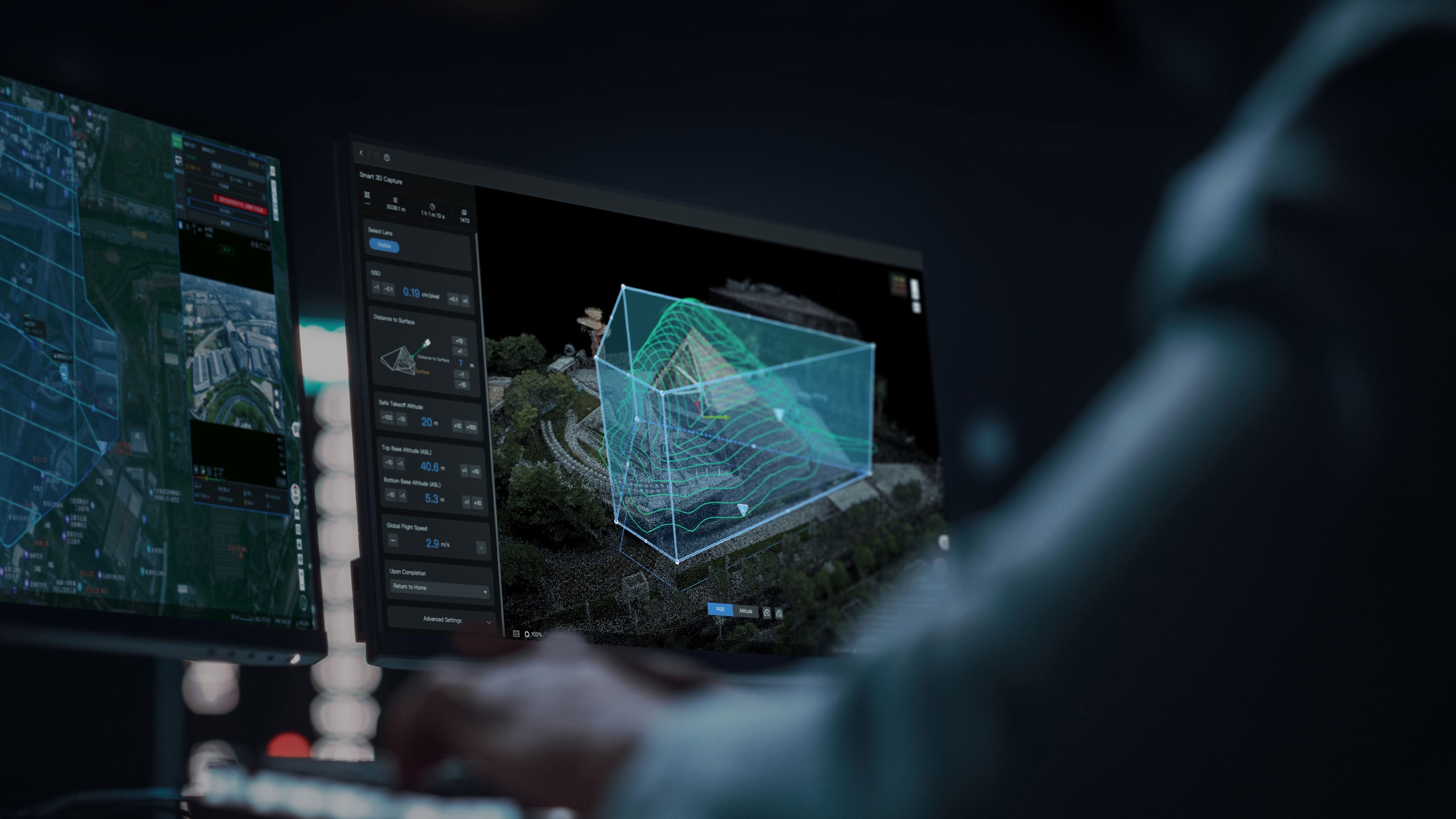
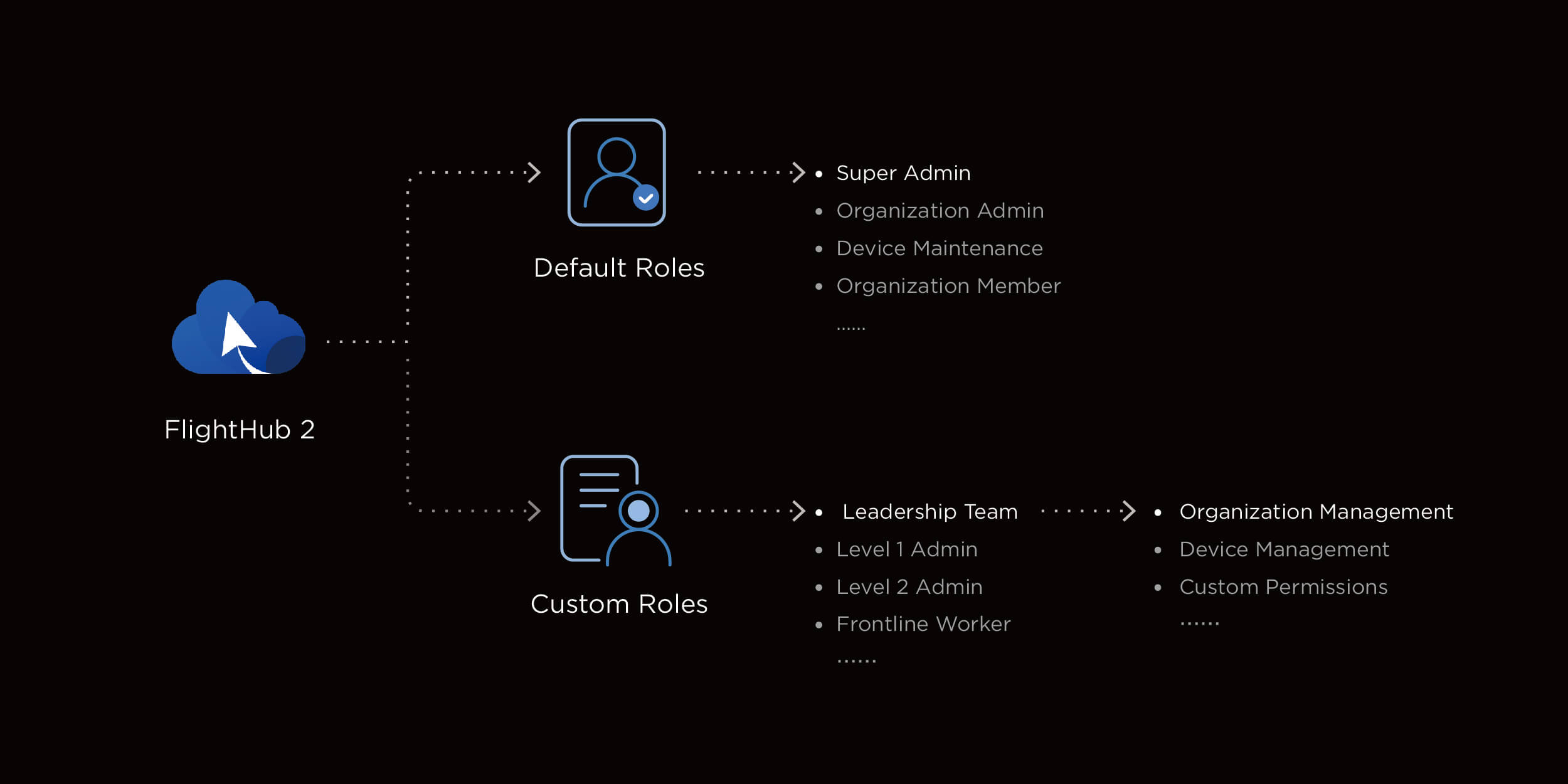
DJI FlightHub 2 is the software layer that converts the Dock 3’s hardware capability into a managed, intelligent operation. Task planning, live monitoring, incident alerting, data management, and team coordination all run through the same platform and the tools built specifically for the Dock 3 and Matrice 4D/4TD system go well beyond basic flight control.

Intelligent Flight and Control

Pre-planned automated routes run without operator input once established the aircraft follows the path, detects and captures relevant subjects including vehicles, vessels, and thermal anomalies along the route, and sends alerts back to the control team as findings occur. For regular patrol cycles and scheduled inspection runs, this removes the manual workload from routine operations while keeping the operator informed in real time.

Rather than comparing mission imagery manually, change detection runs periodically across a defined area and flags what’s different between survey passes. Structural cracks that have widened, environmental changes in protected zones, and ground shifts after natural events all get surfaced as actionable findings rather than buried in a dataset that requires someone to review every frame. Decision-making becomes faster because the system does the comparison work.

Smart Track locks onto a moving subject — a vehicle, a vessel, a person of interest and keeps it centred in frame using the Matrice 4D Series’ auto-zoom capability. The camera follows the target as it moves without the operator manually adjusting framing, which keeps attention on the operation rather than the controls and produces footage that’s usable for review or evidentiary purposes.

The updated Virtual Cockpit interface adds Mouselook point anywhere in the live view and the aircraft adjusts both its heading and gimbal orientation to centre that point in frame automatically. For remote operators managing surveillance or inspection from a control room, it converts what was previously a multi-input coordination task into a single intuitive action. What you point at is what you see, immediately.”

Efficient Operation

When a situation develops that needs immediate aerial response, setup time is the enemy. Open and Fly gets the aircraft to a point 1 km away at 100 m altitude within 100 seconds of the task being assigned using optimal route planning to find the fastest path rather than a default heading. Situational awareness from above is available almost immediately rather than after a full mission planning sequence.

The upgraded transmission engine cuts live view delay on FlightHub 2 to a level that makes real-time decision-making actually real-time. In emergency and public safety operations where what’s happening on screen needs to match what’s happening on the ground without perceptible lag, the reduction in latency isn’t a marginal improvement it’s operationally meaningful.

Survey and mapping data transfers during the flight rather than waiting for the aircraft to land and sync. Upon touchdown, the transfer completes immediately and a preliminary 3D model generates in the cloud within minutes. For emergency response and time-critical site assessment, having a rough spatial model available within minutes of the flight ending rather than hours after post-processing fundamentally changes how quickly the team on the ground can start using the data.

Take off quickly and arrive at the emergency site to improve situational awareness.

Engine upgrade significantly reduces live view latency.

Real-time data transmission and rapid modeling can be achieved during flight.

Open Ecosystem, Breaking Boundaries

Intelligent Algorithm Developer

Development teams building custom intelligent applications on the Dock 3 and Matrice 4D platform get access to the model training tools needed to work within the ecosystem, along with a structured certification pathway that brings third-party algorithms into compliant, production-ready deployments.

Learn More ↗

PSDK

The Payload SDK connects third-party hardware to the Matrice 4D Series through E-Port and E-Port Lite, with encryption authentication built into both connections. Custom sensors, specialist instruments, and industry-specific payloads integrate without compromising the security of the data flowing through the aircraft.

Learn More ↗

MSDK

Mobile SDK 5 gives developers a fully open-source foundation for building custom control applications on the Matrice 4D Series. Production-grade code samples from core DJI Pilot 2 modules are included so development teams aren’t starting from scratch, and the reliability of the reference implementation is already field-proven.

Learn More ↗

Cloud-to-Cloud Coordinated Operation

Organisations running their own data infrastructure or enterprise cloud platforms can connect them directly to DJI FlightHub 2 through FlightHub Sync. Operational data flows into existing workflows rather than sitting in a separate system that requires manual export and reconciliation.

Learn More ↗

Cloud API

The MQTT-based Cloud API in DJI Pilot 2 connects the Matrice 4D Series directly to third-party cloud platforms without requiring a custom app build. Hardware status, live video stream, and captured image data are all accessible through the API making integration with existing operations management systems straightforward for development teams working in any stack.

Learn More ↗

Third-Party Payloads

E-Port on the aircraft accepts third-party payloads including safety systems like parachutes, and DJI FlightHub 2 handles remote payload control from the ground without requiring the operator to be within physical range of the aircraft. A dedicated rear PSDK port adds a second payload connection point for setups that need simultaneous front and rear instrumentation.

DJI Terra API

The DJI Terra API exposes the platform’s photogrammetry engine to external systems 2D and 3D reconstruction runs automatically within the user’s own platform rather than as a separate step. Organisations with specific workflow requirements can customise the photogrammetry pipeline to match their output standards, making the Matrice 4D’s survey results plug directly into GIS, construction, and asset management systems without intermediate conversion steps.

Learn More ↗
D-RTK 3 Relay Fixed Deployment Version

Mounted at elevation, the D-RTK 3 Relay Fixed Deployment Version delivers centimeter-level RTK positioning accuracy to the aircraft while simultaneously acting as a signal relay for video transmission. Obstructions that would block a ground-level signal path stop being a site selection constraint the relay sits above them, and both positioning and video transmission operate cleanly regardless of what’s between the dock and the horizon. This single accessory removes two of the most common barriers to optimal Dock 3 placement.

Purchase DJI Matrice 4D/4TD Series and
Get 1 Year of DJI Care Enterprise Plus
or 1 Year of Official Extended Warranty Service for Free [29]

DJI Care Enterprise Plus

Comprehensive Protection | Professional Quality Assurance | Exclusive Service | Service Starts with Activation

Free Repairs

Unlimited number of free repairs within the coverage limit

Battery Replacement

2 batteries per year, long-lasting runtime

Coverage for Your Whole Fleet

Shared limit for maximum protection

Free Shipping

Free mail-in repairs, hassle-free service

Expert Service

Rapid response from DJI product experts

Extended Warranty Service

In addition to the official warranty, an extra 1-year warranty extension is provided. Major parts are covered by the official warranty, with support provided by our professional engineers.

Official Service

Supported by professional engineers

Quality Repairs

Original parts, guaranteed quality

Application Scenarios

Request for a Quote

Your journey into the extraordinary begins here. Share your details for a personalized DJI Dock 3 quote and let your imagination soar.

    ✅ Thank you for reaching out. Your message has been successfully sent, and our team will get in touch with you shortly.